
From Kraft Corporate to Artisan Founder: Scaling Soul
When Your Background Is Your Biggest Liability
Client: Artisan Kettle (Founder: Beth Goeddel, Former Kraft Brand Manager)
Location: Madison, Wisconsin
Crisis Type: Authenticity Crisis + Premium Positioning
Timeline: 16-month brand evolution
BRANDEM Pillars Applied: TRUTH • BEACON • IMPACT • ENGAGEMENT
🔥 THE SITUATION: The Corporate Refugee’s Dilemma
Beth Goeddel spent 12 years at Kraft Foods building brands that moved billions. She knew how to scale. She knew retail. She knew consumers.
But she also knew something was broken.
The Founder’s Awakening
After years of optimizing chocolate products for shelf life, cost efficiency, and mass appeal, Beth had an epiphany:
The chocolate industry had lost its soul.
- Commodity cacao from questionable sources
- “Chocolate” products with minimal actual chocolate
- Artificial ingredients for shelf-stable profitability
- Zero connection between farmer and consumer
She decided to build the opposite: Organic. Fair Trade. Small-batch. Craft chocolate made with integrity.
She launched Artisan Kettle with baking chips in Whole Foods.
The Crisis That Nobody Saw Coming
The brand started strong, but then hit a wall:
Retailer feedback:
“Your chocolate is great, but your brand looks… corporate. Like Kraft trying to do ‘artisan.’ Customers don’t believe it.”
Customer research revealed:
- “Tastes premium but looks generic” (62% of focus group)
- “Can’t tell if it’s made by a real person or a factory” (71%)
- “Would pay more IF I believed the story” (84%)
The data:
- Whole Foods placement: Success
- Expansion to conventional grocery: Stalled (brand doesn’t justify premium in mass market)
- Fine chocolate bar launch: Delayed (brand equity insufficient for $8 bar)
- Investor confidence: Shaky (Is this scalable or a lifestyle brand?)
The Impossible Ask
Beth’s dilemma was every corporate refugee founder’s nightmare:
She needed to:
- Look authentically artisan (not Kraft-manufactured)
- Scale nationally (which requires corporate infrastructure)
- Command premium pricing in commodity category
- Prove Fair Trade ethics are brand assets, not costs
- Attract both conscious consumers AND mainstream buyers
The paradox: Use her corporate expertise to build a brand that feels like she’s NEVER been corporate.
🎯 THE TASK: Make Corporate Experience the Secret Weapon, Not the Liability
The Strategic Challenge:
Transform Artisan Kettle from “trying to be artisan” to “artisan at scale”—a new category.
The Constraints:
- Can’t hide Beth’s Kraft background (it’s Google-able)
- Can’t out-artisan tiny chocolate makers (they’re ACTUALLY tiny)
- Can’t compete on price with Hershey’s (organic costs more)
- Can’t slow down to seem artisan (investors want growth)
The Opportunity:
What if Beth’s corporate past wasn’t a liability—but a structural advantage?
She knows how to:
- Navigate retail buyers (gets shelf space artisan brands can’t)
- Manage supply chain at scale (lowers cost, increases margin)
- Build brand systems (consistency across touchpoints)
- Create scalable operations (artisan quality, corporate efficiency)
The reframe: She’s not “Kraft exec playing artisan.” She’s “The artisan who knows how to scale without selling out.”
⚡ THE ACTION: BRANDEM Framework Application
Phase 1: TRUTH Force Activation — Reframe the Founder Story
Old Narrative (Liability): “Former Kraft brand manager launches organic chocolate chips”
New Narrative (Asset): “After 12 years inside Big Chocolate, Beth Goeddel left to build what the industry forgot: chocolate made with integrity, for people who actually care where it comes from.”
The Positioning:
Artisan Kettle isn't trying to be small.
It's trying to prove that SCALE and SOUL aren't opposites.
Founder Story Architecture:
- The Insider Knowledge: Beth saw how chocolate is REALLY made (not pretty)
- The Awakening: Realized she couldn’t fix it from inside
- The Sacrifice: Left corporate security to build the alternative
- The Advantage: Uses industry knowledge to do it RIGHT, at SCALE
Result: Beth’s background becomes credibility (“She knows what she’s disrupting”) instead of liability.
Phase 2: BEACON Force Activation — Elevating Visual Language
The Brand Identity Challenge:
Look premium enough for $8 chocolate bars, authentic enough for Whole Foods, clean enough for Target.
Visual Strategy:
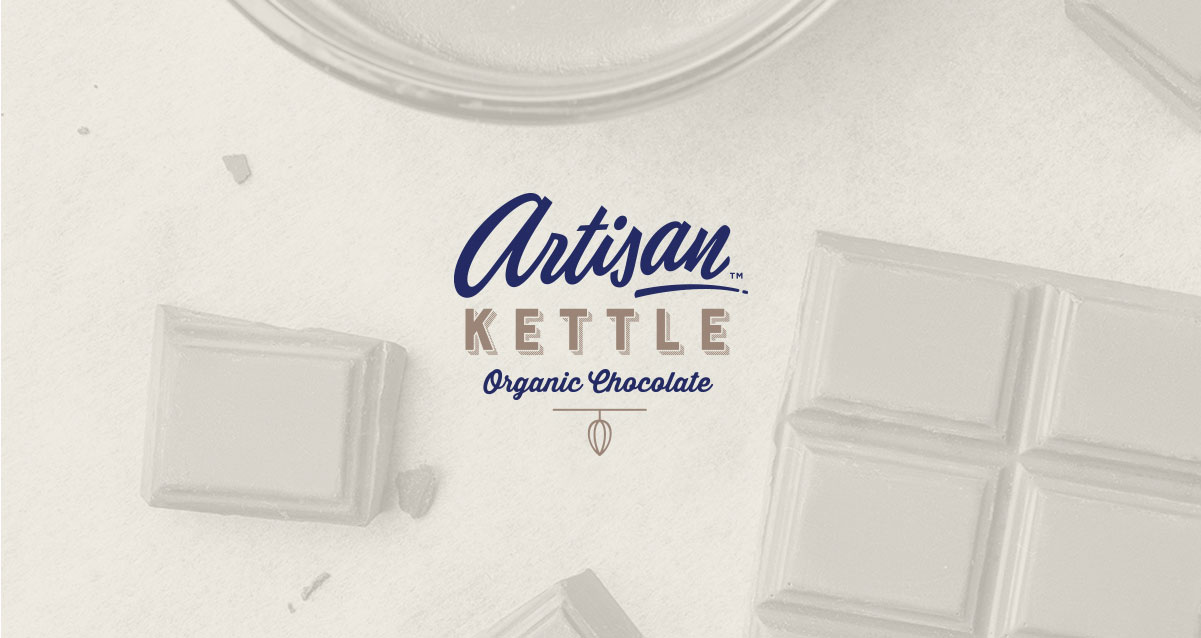
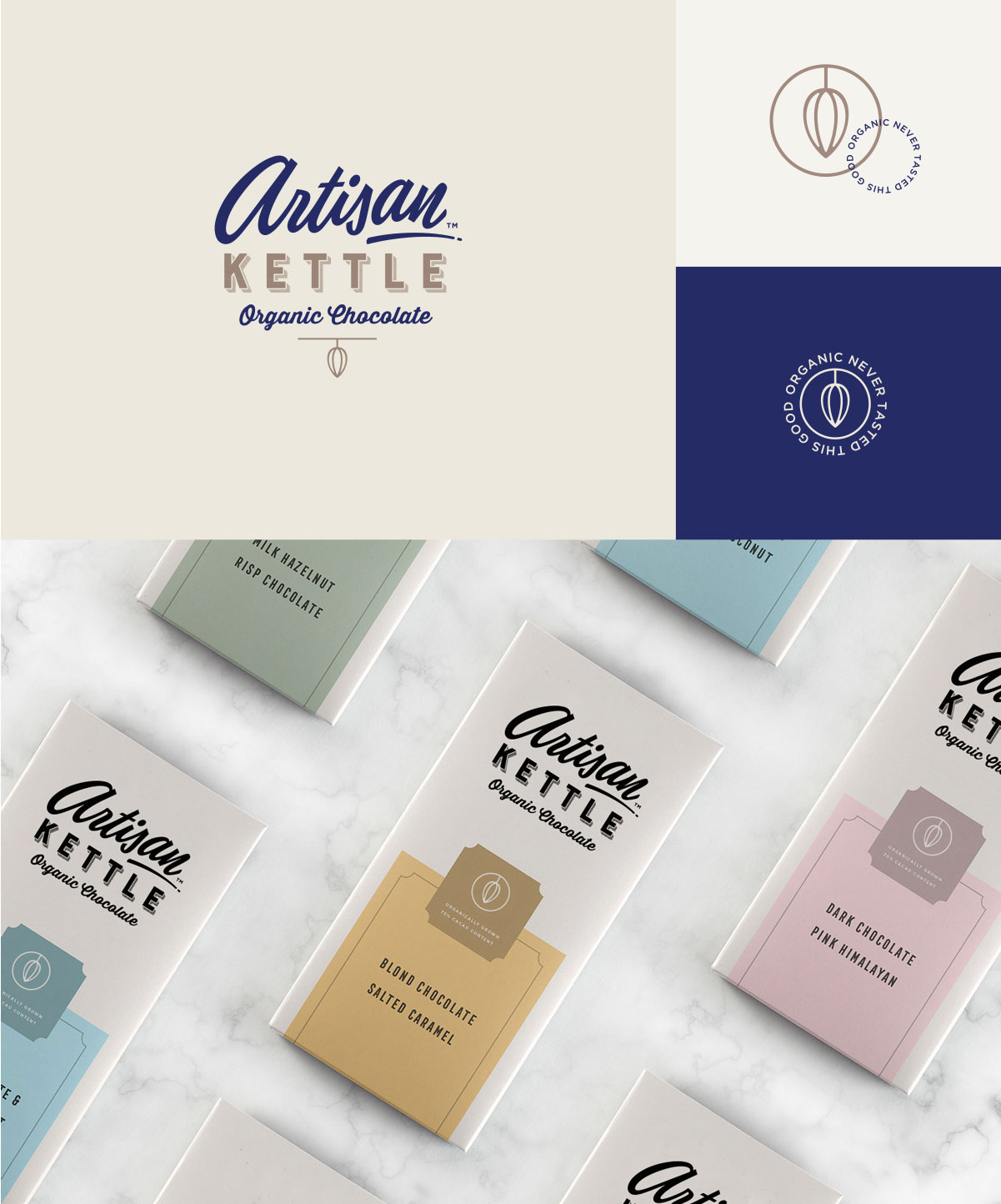
Typography:
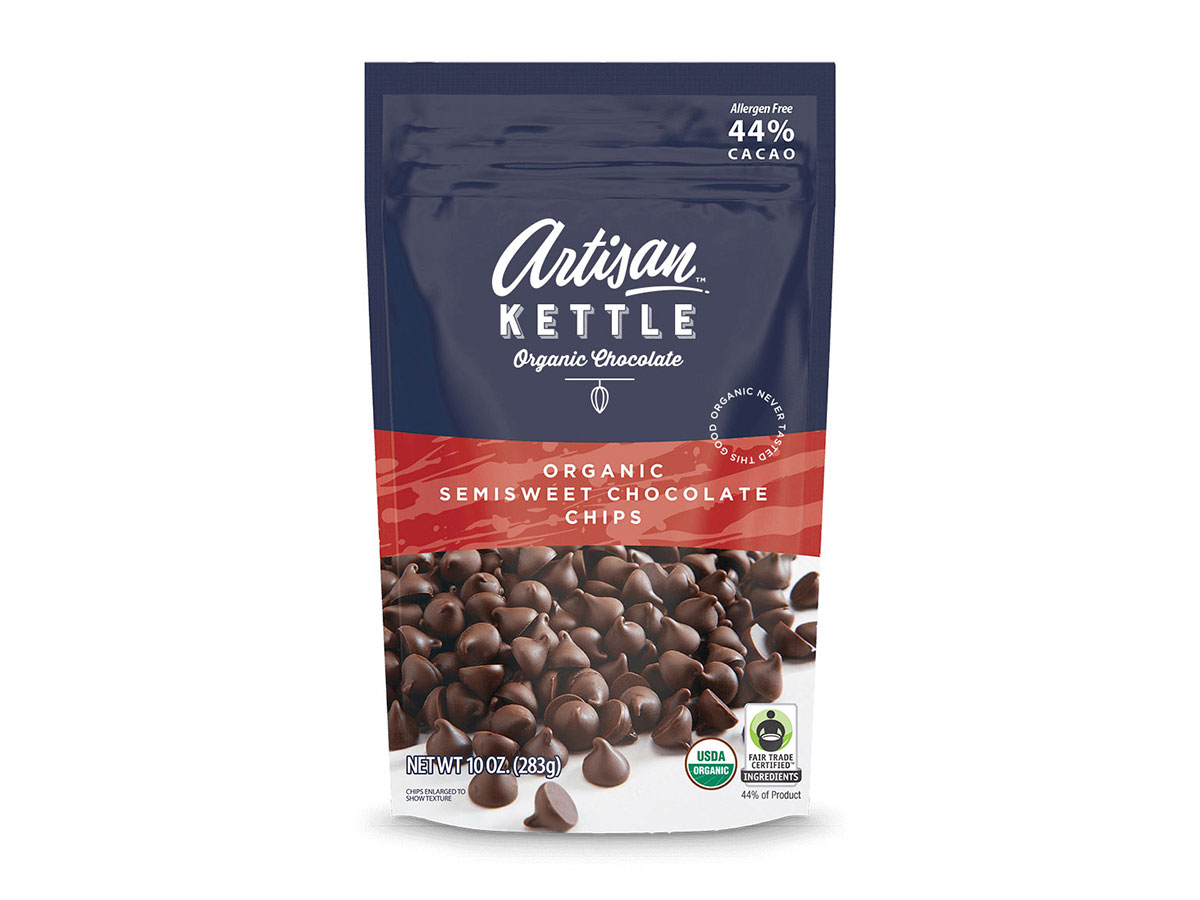
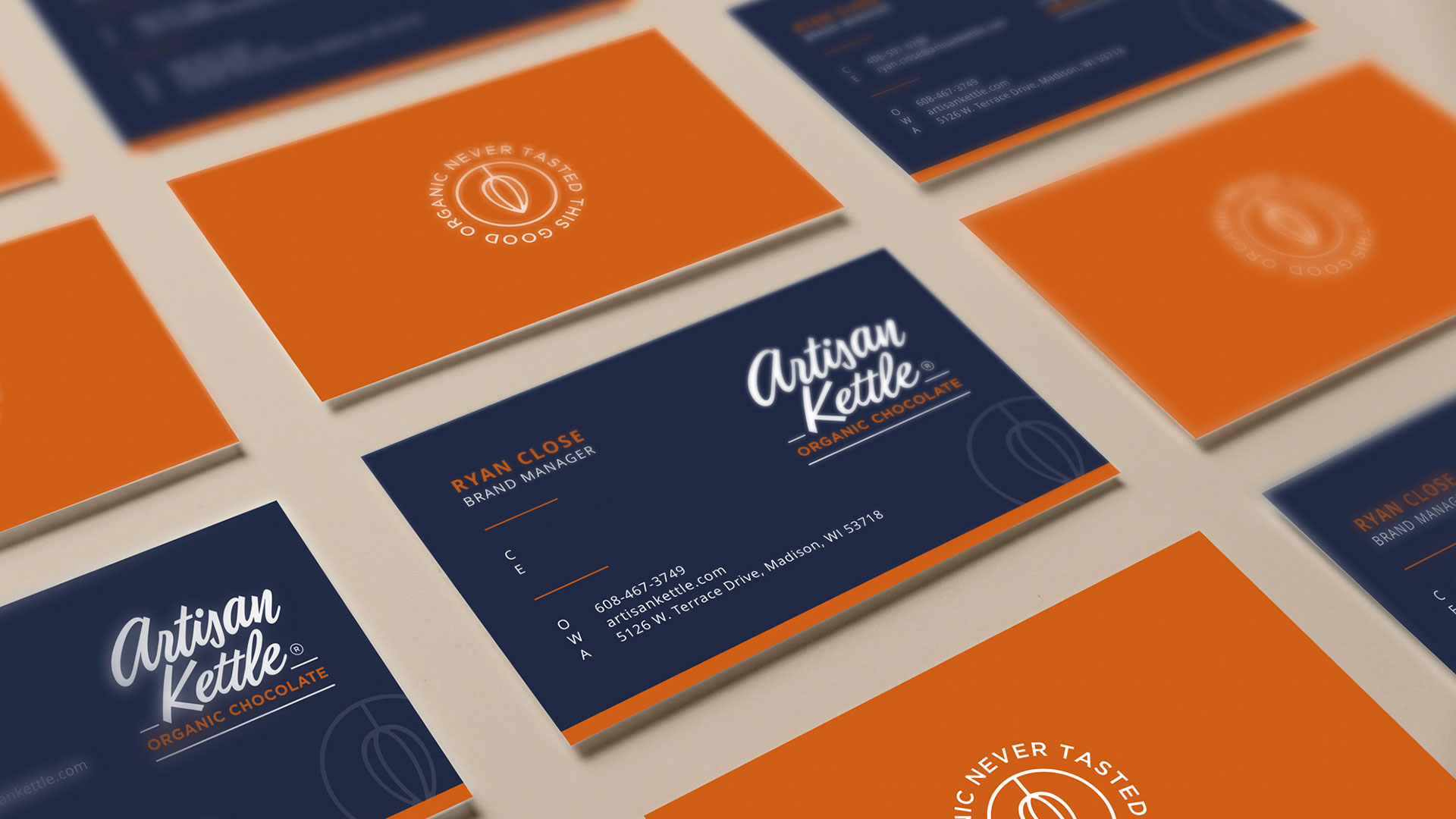
- “Artisan” in delicate serif (craft, elegance, hand-made heritage)
- “Kettle” in bold sans-serif (modern, confident, capable of scale)
- Contrast = paradox solved visually (craft + scale)
Logo System:
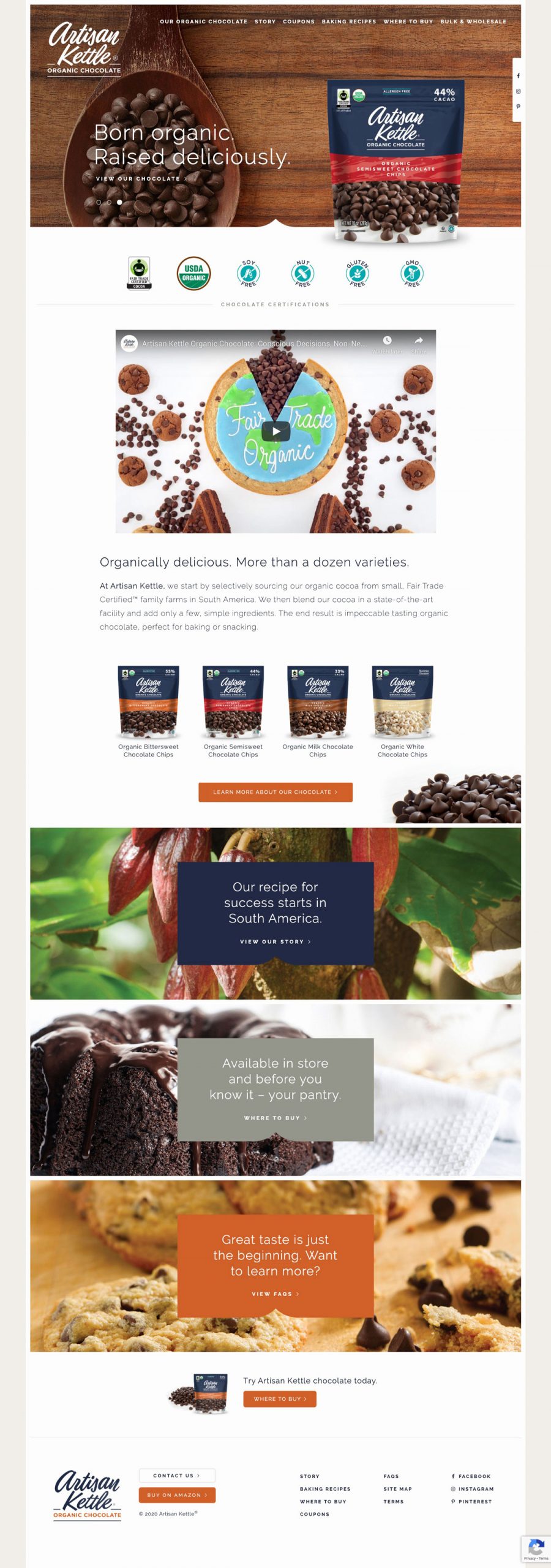
- Primary mark: Full wordmark (packaging, website)
- Secondary icon: Elegant kettle seal (quality stamp, package accents)
Color Palette:
- Deep chocolate browns (obvious, authentic)
- Vibrant accent colors (cacao origin stories—Ecuador purple, Ghana gold)
- White space (premium, clean, let product be hero)
The Genius: The brand LOOKS handcrafted but FEELS organized. Artisan soul, corporate execution.

Phase 3: IMPACT Force Activation — Making Ethics Visible
Fair Trade isn’t a footnote—it’s the STORY.
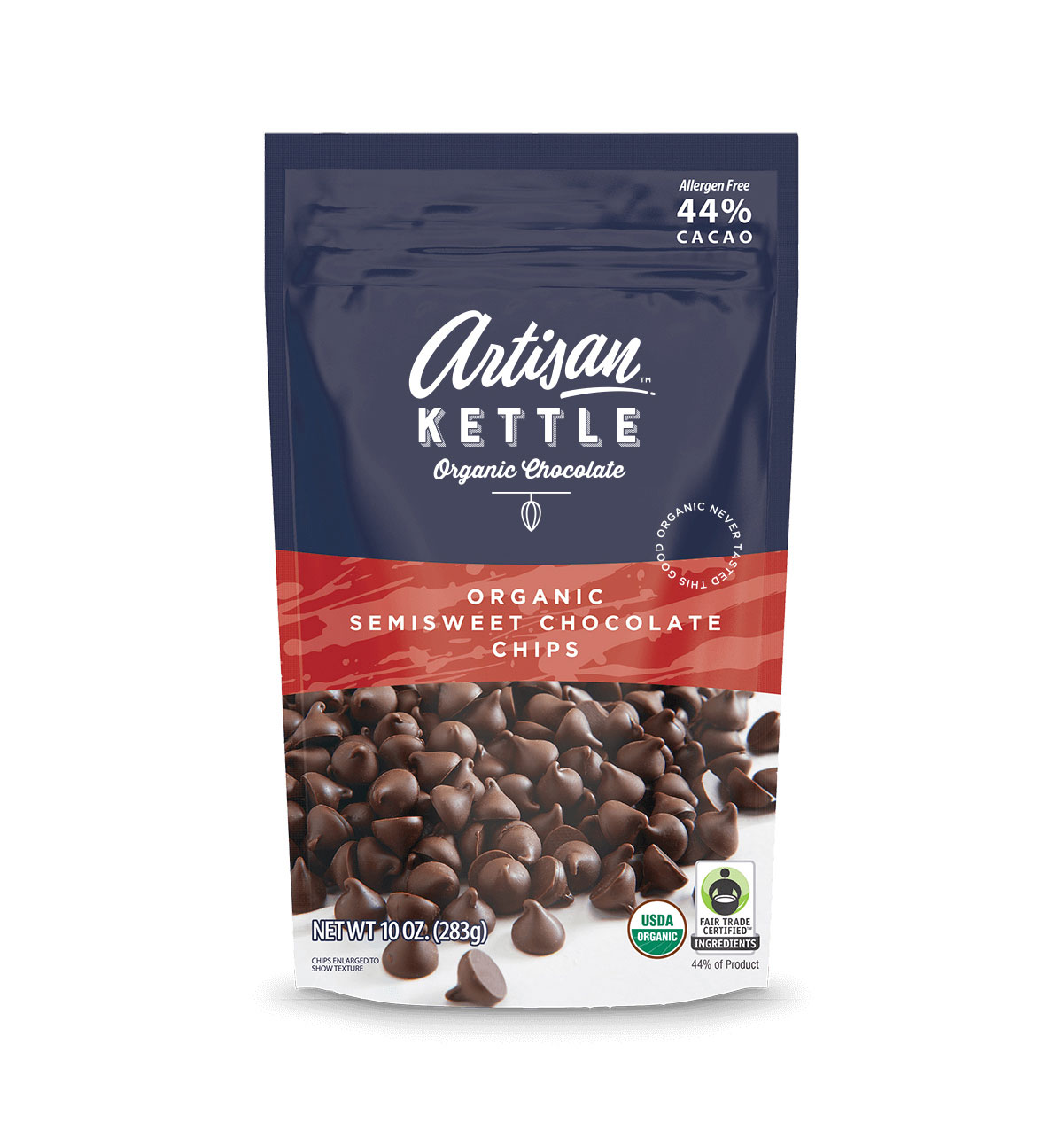
Packaging Strategy:
- Front label: “Organic • Fair Trade • Small-Batch Crafted”
- Side panel: Farmer stories (with photos, names, villages)
- QR code: “Meet the farmers who grew this chocolate”
Origin Transparency:
- Each product links to specific cacao cooperative
- Interactive map showing farm-to-bag journey
- Impact metrics: “Your purchase funded 3 weeks of education for farmer’s children”
The Emotional Shift: You’re not buying chocolate chips. You’re funding ethical chocolate infrastructure.
Phase 4: ENGAGEMENT Force Activation — Connoisseur Community
Target Audience Refinement:
NOT: “Everyone who likes chocolate” (too broad)
YES: “Conscious connoisseurs”—people who:
- Read ingredient labels
- Care about sourcing ethics
- Appreciate craft (coffee, wine, chocolate)
- Will pay premium for values alignment
- Influence their social circles
Community Building:
- “Kettle Club” loyalty program
- Recipe cards with every purchase (baking is community)
- Instagram content: Farmer spotlight Fridays
- Sampling events at Whole Foods (taste = belief)
🏆 THE RESULTS: When Artisan Scales Without Selling Out
Quantitative Transformation (16 Months)
Revenue Growth:
- ✅ $2.4M → $12.3M annual revenue (+413%)
- ✅ SKU expansion: 11 products → 28 products (bars, chips, baking cocoa, hot chocolate)
- ✅ Retail expansion: 340 stores → 2,400 stores nationally
Margin Improvement:
- ✅ Average retail price: $5.99 → $7.49 (premium positioning validated)
- ✅ Gross margin: 38% → 52% (scale + premium = profit)
- ✅ Customer willingness to pay: +34% after rebrand
Category Performance:
- ✅ Organic baking chips category: #2 market share (behind only Enjoy Life)
- ✅ Fine chocolate bars: Successful launch, $3.2M Year 1 revenue
- ✅ Velocity per store: +67% (brand clarity = faster turns)
Retail Wins:
- ✅ Target expansion: 860 stores (mass market breakthrough)
- ✅ Whole Foods endcap placement: Premium positioning achieved
- ✅ Amazon top seller: #1 in organic baking chocolate
Qualitative Validation
Customer Review (Amazon, 5 stars):
“I used to buy whatever chocolate chips were cheapest. Then I tried Artisan Kettle and watched the farmer video. Now I can’t go back. Yes, they’re more expensive. But I actually KNOW where my chocolate comes from. That’s worth $2.”
Retailer Feedback (Whole Foods Buyer):
“The rebrand changed everything. Before, it was ‘another organic chocolate brand.’ Now it’s ‘THE organic chocolate brand with a real story.’ Big difference in customer perception.”
That’s positioning power.
The Founder’s Win
Beth’s reflection:
“The framework helped me stop apologizing for being from Kraft. Now I lead with it: ‘I know how Big Chocolate works, which is exactly why I’m doing THIS.’ My background isn’t baggage—it’s why customers trust me to do it right.”
Investor Impact:
- Series A raised: $4.5M (brand credibility = investor confidence)
- Valuation: 3x increase post-rebrand
- Exit pathway: Positioned for strategic acquisition or continued growth
💡 THE STRATEGIC LESSON: Your Past Can Be Your Positioning
What This Means for Corporate Refugees
If you left corporate to start something “authentic,” your biggest fear is probably: “Will people think I’m just playing founder?”
Artisan Kettle proved: Your corporate past is a feature, not a bug—IF you position it right.
The Framework You Can Steal
1. Reframe the Origin Story
- NOT: “I escaped corporate hell”
- YES: “I learned from the inside, now I’m building the alternative”
2. Make Your Expertise Your Moat
- Beth’s advantage: Knows how to navigate retail, scale operations, build systems
- Your advantage: What do you know that artisan-only founders don’t?
3. Define “Artisan at Scale”
- Small-batch doesn’t mean small business
- Craft quality + corporate efficiency = category leadership
- Prove they’re NOT opposites
4. Make Ethics Tangible
- Don’t just SAY Fair Trade—SHOW the farmers
- Impact metrics, origin stories, transparency
- Values = competitive advantage (when visible)
5. Premium Positioning Through Purpose
- Charge more because you cost more (organic, Fair Trade)
- Make the “why” visible on every package
- Customers pay premium for values alignment
The Crisis This Solves
If you’re facing:
- Corporate background threatening artisan credibility
- “Imposter syndrome” as founder
- Struggle to justify premium pricing
- Retail buyers don’t believe your story
- Scaling fears (will I lose authenticity?)
This is your playbook.
🔄 The Continuing Evolution
Today, Artisan Kettle:
- Expanding into candy category (organic chocolate bars, truffles)
- B2B partnerships: High-end bakeries using Artisan Kettle as premium ingredient
- Subscription service: Monthly chocolate discovery boxes
- Educational content: “Chocolate School” video series (farmer stories, sourcing, recipes)
- Impact growth: Now supporting 14 Fair Trade cooperatives (up from 3)
Category ownership: When people think “organic chocolate with integrity,” they think Artisan Kettle.
📞 Your Corporate-to-Founder Transition Crisis?
If you’re a founder worried your corporate past undermines your artisan positioning, we should talk.
The BRANDEM Framework specializes in:
- Reframing founder origin stories
- Artisan-at-scale positioning
- Premium CPG brand strategy
- Ethical sourcing as brand asset
- Corporate refugees building authentic brands
Because sometimes the crisis isn’t that you came from corporate.
Sometimes it’s that you haven’t figured out how to make that your advantage.
Related Framework Resources:
- TRUTH Pillar: Authentic Founder Positioning →
- BEACON Pillar: Premium Brand Identity →
- IMPACT Pillar: Values as Competitive Advantage →
- More Founder Transformation Case Studies →
This transformation demonstrates BRANDEM OS pillars in action: TRUTH (founder story reframe), BEACON (premium visual identity), and IMPACT (ethical sourcing visibility). Every corporate-to-founder transition crisis has a framework-based solution.