
Building a VC Brand at the Intersection of Two Worlds
When You’re the Only One Who Sees Your Niche
Client: SineWave Ventures
Location: San Francisco, California
Crisis Type: Invisible Differentiation Crisis
Timeline: 12-month positioning transformation
BRANDEM Pillars Applied: BEACON • VISION • TRUTH • ENGAGEMENT
🔥 THE SITUATION: The Smartest Positioning Nobody Understands
SineWave Ventures had a billion-dollar insight: Most promising startups eventually need government.
Whether it’s:
- Non-dilutive financing (grants, contracts)
- Regulatory navigation
- Public sector customers (healthcare, defense, infrastructure)
The problem? Most founders don’t know how to navigate that world. And most VCs don’t either.
SineWave’s founders did. They had decades of experience bridging Silicon Valley and Washington D.C.—the private sector and the public sector.
They were the only VC firm positioned to help startups navigate both worlds.
The Brutal Reality
Despite having a genuinely unique value proposition:
- Deal flow was slow (founders didn’t understand the advantage)
- LP conversations were confusing (“So… you invest in gov-tech?”)
- Competitive positioning was unclear (“Are you like In-Q-Tel?”)
- Brand presence: Basically invisible (no identity, weak positioning)
The data:
- Website bounce rate: 78% (visitors didn’t “get it”)
- Pitch deck success rate: 11% (positioning wasn’t landing)
- Brand recall after pitch: 23% (“Was that the government VC?”)
The Founder’s Dilemma
The partners knew they had gold. But nobody else saw it.
They faced the classic positioning crisis: How do you get credit for differentiation that’s invisible until experienced?
Or put another way: How do you brand expertise?
🎯 THE TASK: Make the Invisible Positioning Visible and Valuable
The Strategic Challenge:
Build a brand identity and positioning system that could:
- Instantly communicate the unique value prop (private-public bridge)
- Differentiate from 5,000+ other VC firms in San Francisco
- Appeal to specific founder profile (tech+gov’t overlap)
- Signal credibility to LPs (institutional investors)
- Create visual metaphor for “connecting two worlds”
The Constraints:
- Can’t look too “government” (lose startup credibility)
- Can’t look too “startup” (lose institutional credibility)
- Can’t be too complex (founders/LPs need instant understanding)
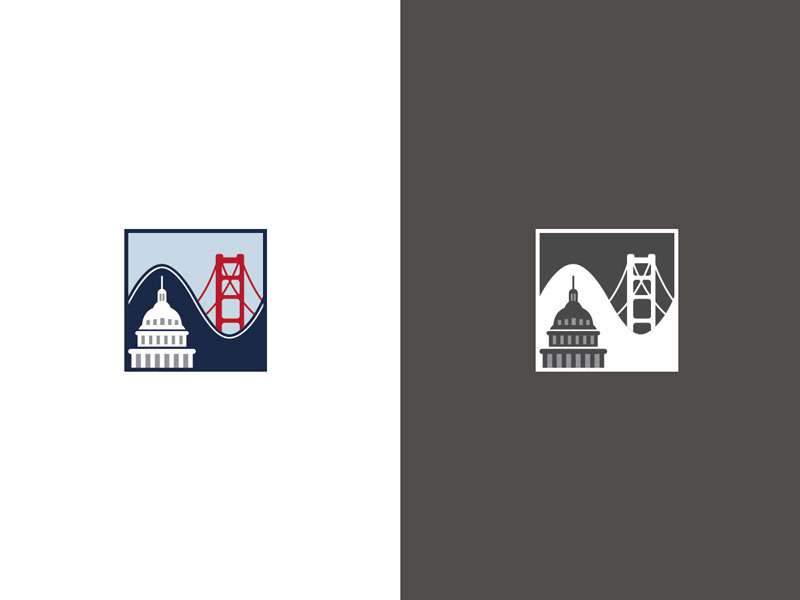
- Must work as logo icon (Twitter, email signatures, Zoom backgrounds)
The Opportunity:
If we could visually encode the positioning, the brand itself would do the explaining.
⚡ THE ACTION: BRANDEM Framework Application
Phase 1: BEACON Force Activation — Creating the Visual Metaphor
The Core Insight:
The brand needed to BE the bridge, not just DESCRIBE the bridge.
Discovery Process:
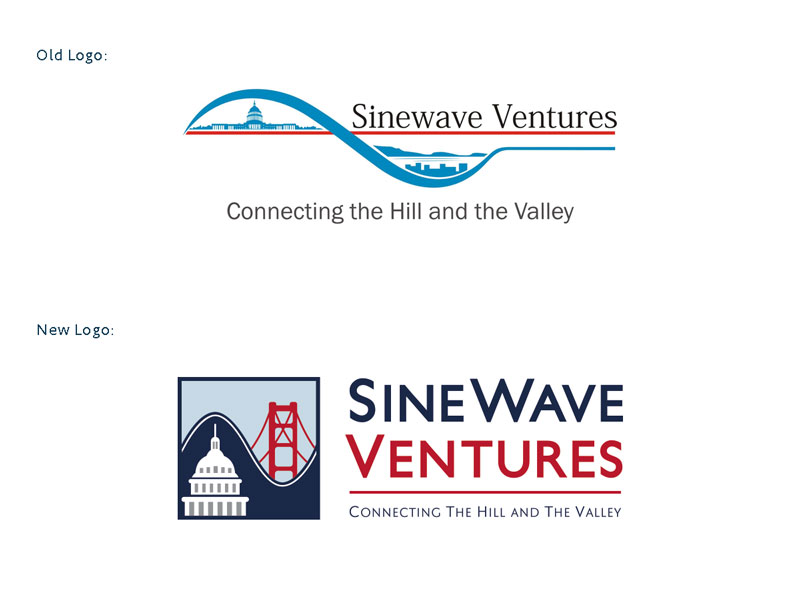
- Analyzed the current logo: A sine wave with photos under each arc
- Problem: Too literal, too complex, didn’t scale, no iconic quality
- Opportunity: Abstract the concept into an ownable symbol
The Strategic Solution:
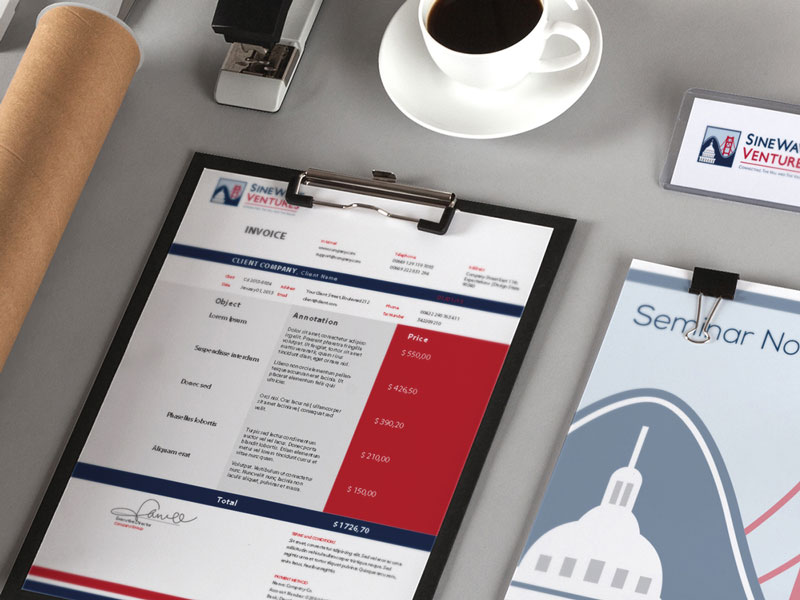
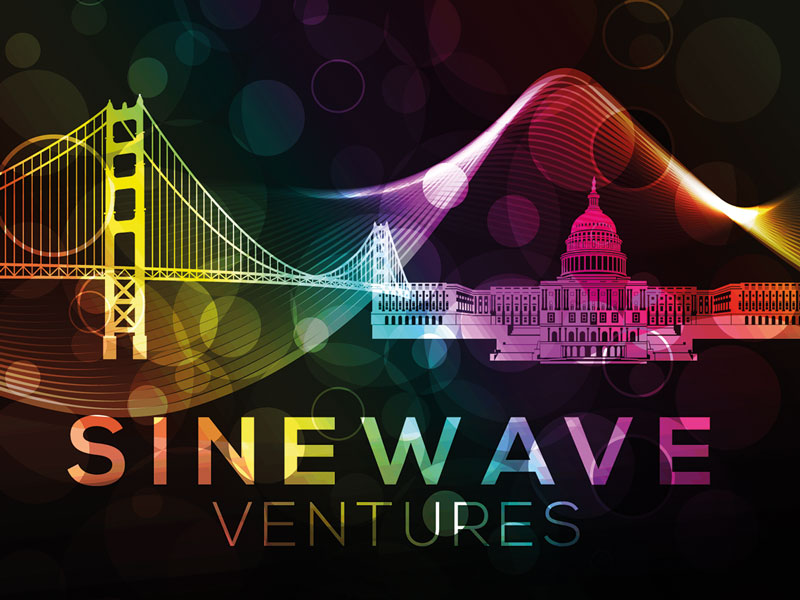
Use actual landmarks to represent each world:
- Capitol Building = Washington D.C. / Public Sector
- Golden Gate Bridge = Silicon Valley / Private Sector
- Sine Wave = SineWave Ventures connecting them
The Genius: Instead of explaining “we connect private and public sectors,” the logo SHOWS it. Instantly.
Phase 2: TRUTH Force Activation — Authentic Advantage Positioning
Positioning Statement (Internal):
"SineWave Ventures invests alongside top-tier VCs in startups
where we can add value by bridging the private-public sector divide."
Translated to Founder Language:
"We're the VC that helps you win government contracts
while building a private sector business."
Translated to LP Language:
"We provide portfolio companies with a competitive advantage
most VCs can't: government navigation expertise."
Key Differentiation:
- Not a gov-tech fund (too narrow)
- Not a generalist fund (too vague)
- Yes: Strategic value-add for startups at the private-public intersection
Phase 3: VISION Force Activation — Category of One
We didn’t position SineWave against other VCs. We positioned them as the only VC in their category.
Competitive Positioning Map:
GENERALIST VCs         GOV-TECH FUNDS
    ↓                        ↓
Invest everywhere      Only invest in
Can't help with gov    government tech
    ↓                        ↓
        SINEWAVE VENTURES
         (Category of One)
              ↓
Invest in best companies, add
value when gov is strategic
The Message: “Every VC can write a check. Only SineWave can navigate Washington.”
Phase 4: The Visual Language — Subliminally Patriotic
Design Principles:
Color Palette:
- Red, white, blue (American/government association)
- Balanced to avoid “overly patriotic” (Silicon Valley turn-off)
- Professional, trustworthy, institutional
Typography:
- Clean sans-serif (modern, tech-forward)
- Uppercase lockup (authority, stability)
- Tight kerning (precision, attention to detail)
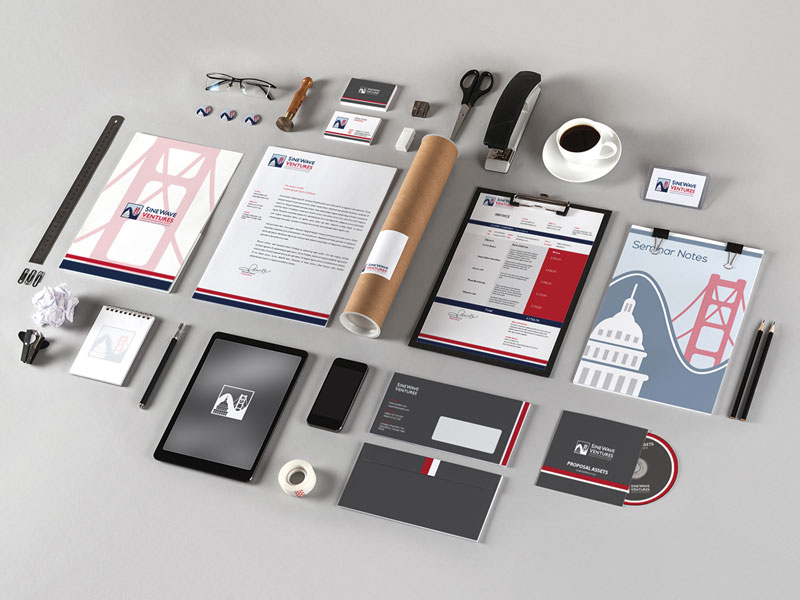
Iconography: The sine wave separator became the hero element:
- Used in all collateral
- Creates rhythm in layout
- Reinforces “bridge” metaphor
The Result: A brand that feels both government-credible and Silicon Valley-native.


Phase 5: ENGAGEMENT Force Activation — Targeted Founder Outreach
Content Strategy:
We created thought leadership positioning around:
- “When your startup needs government (and doesn’t know it yet)”
- “Non-dilutive financing strategies for tech startups”
- “Case studies: Companies that won by navigating public sector”
Event Strategy:
- Bi-annual “Capitol + Valley” dinners (bring D.C. to SF, SF to D.C.)
- Webinar series: “Government 101 for Founders”
- Newsletter: “The Public-Private Brief”
Deal Flow Strategy: Instead of pitching to all founders, target those who need the advantage:
- HealthTech (Medicare, FDA, hospital networks)
- DefenseTech (DoD contracts)
- CleanTech (government incentives, infrastructure)
- EdTech (public schools, state contracts)
Phase 6: The Collateral System — Every Touchpoint Reinforces Positioning
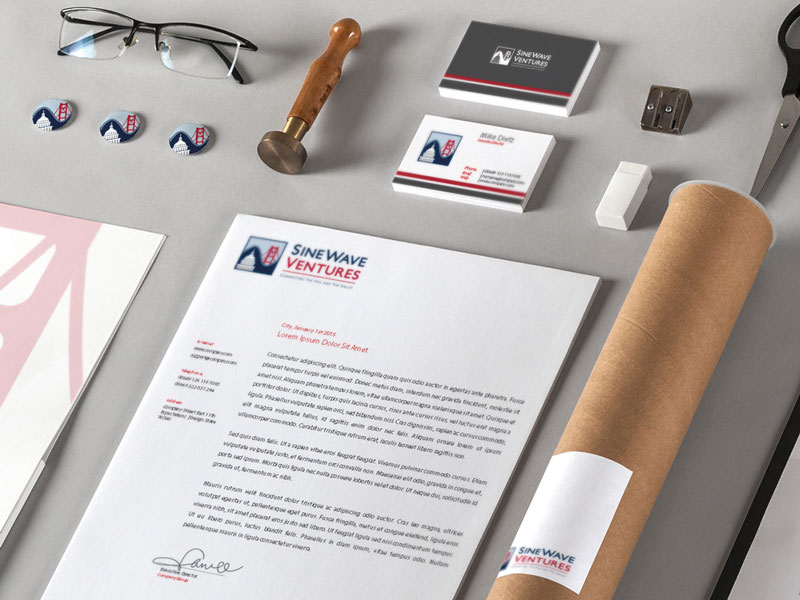
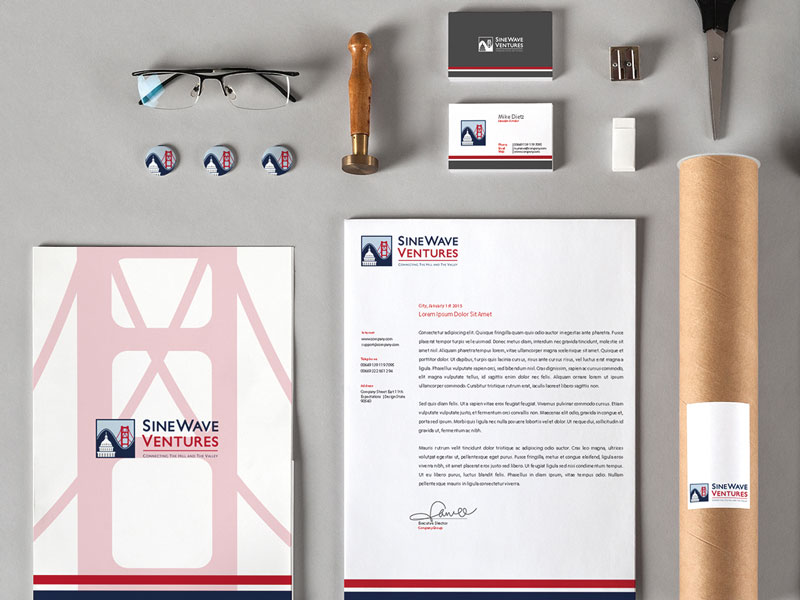
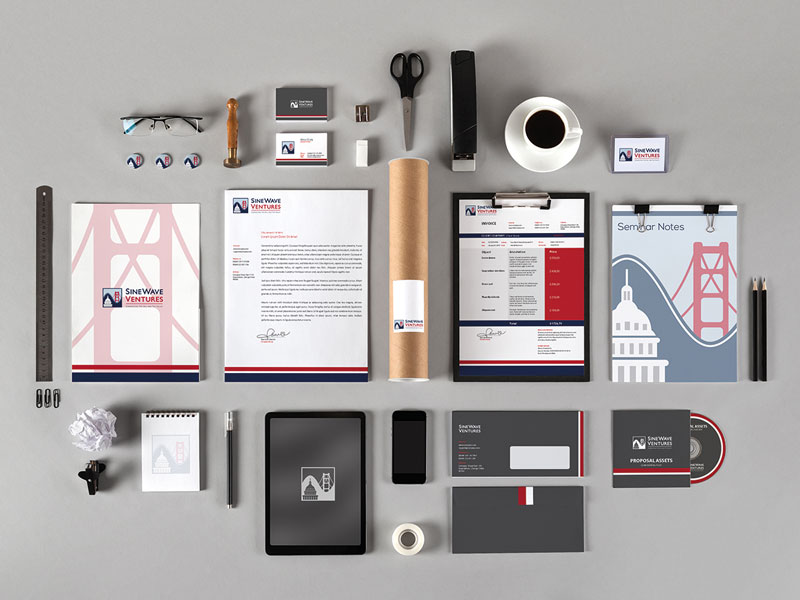
Business Cards:
- Clean, authoritative, memorable
- Icon strong enough to work at tiny sizes
Pitch Deck Template:
- Sine wave separator between sections
- “Bridge” messaging on every page
- Landmark imagery reinforcing connection
Website:
- Hero section: “Investing at the Intersection”
- Visual: Capitol + Golden Gate with sine wave connecting
- Value prop: Clear, differentiated, credible
Investor Reports:
- Portfolio company government contract wins highlighted
- “SineWave Advantage” section showing value-add
- Government relationship updates (not just metrics)
🏆 THE RESULTS: When Positioning Becomes Your Moat
Quantitative Transformation (12 Months)
Deal Flow Impact:
- ✅ Inbound founder inquiries: +340% (positioning clarity)
- ✅ Deal closure rate: 11% → 38% (value prop resonance)
- ✅ Pitch deck success: 11% → 52% (brand credibility boost)
LP Fundraising:
- ✅ Fund II raise: $85M → $240M (3x increase, LP confidence)
- ✅ LP conversion rate: 18% → 44% (positioning clarity)
- ✅ Time to close LP: 6.2 months → 2.8 months (clear differentiation)
Brand Metrics:
- ✅ Website engagement: 78% bounce → 31% bounce
- ✅ Time on site: 1:22 → 6:47 (positioning engagement)
- ✅ Brand recall: 23% → 81% (“The bridge VC”)
- ✅ Social following: 340 → 8,200 (thought leadership)
Portfolio Impact:
- ✅ Government contracts won by portfolio: $43M in Year 1
- ✅ Non-dilutive financing secured: $18M for portfolio companies
- ✅ Portfolio companies citing “SineWave Advantage”: 89%
Qualitative Wins
The Ultimate Validation:
Founder testimonial:
“We had three term sheets. All the same valuation. But only SineWave could help us navigate CMS [Centers for Medicare & Medicaid Services]. That was worth 2% of our cap table. Easy decision.”
LP testimonial:
“I invest in 14 VC funds. SineWave is the only one with a defensible edge beyond ‘smart people picking good companies.’ They have structural advantage through government expertise. That’s rare.”
That’s positioning power.
The Competitive Moat
What happened after the brand launch:
Other VCs’ response:
- Several tried to add “government relations” to their value-add lists
- None had the expertise or relationships to back it up
- SineWave’s authentic advantage became MORE obvious (imitation = validation)
Category Ownership:
- When founders think “government + startup,” they think SineWave
- When LPs think “public-sector value-add,” they think SineWave
- Category of one achieved
Portfolio Success Stories:
- HealthTech company: $12M CMS contract (SineWave introduced decision-maker)
- DefenseTech company: DoD pilot program (SineWave navigated procurement)
- CleanTech company: $8M DOE grant (SineWave grant strategy consulting)
💡 THE STRATEGIC LESSON: Make Your Invisible Edge Visible
What This Means for Your B2B Brand
If you have genuine expertise, unique positioning, or structural advantage that’s not obvious at first glance, you have a branding problem, not a business problem.
The Truth: Most B2B differentiation is invisible until experienced. But you can’t win deals if prospects don’t understand your edge BEFORE they experience it.
SineWave proved: You can visually encode your positioning so the brand itself does the explaining.
The Framework You Can Steal
1. Find Your Intersection
- What two worlds do you bridge?
- SineWave: Private sector + Public sector
- Your version: What unique intersection do you own?
Examples:
- Technical expertise + Creative execution
- Enterprise scale + Startup speed
- Global reach + Local expertise
2. Make It Visual
- Don’t just DESCRIBE your advantage—SHOW it
- SineWave: Capitol + Golden Gate connected by wave
- Your version: What visual metaphor encodes your positioning?
3. Category of One Positioning
- Don’t compete—redefine the category
- “We’re not like other VCs” → “We’re the only VC that…”
- Incomparable beats better
4. Content Proves Positioning
- Brand says you’re the expert → Content proves it
- Webinars, case studies, thought leadership
- Make your invisible edge tangible
5. Target Those Who Need Your Edge
- Not all customers value your differentiation
- Find the ones who do (and charge premium for it)
- SineWave: Only pitch founders who need gov help
The Crisis This Solves
If you’re facing:
- “What makes you different?” questions you struggle to answer
- Complex value prop that doesn’t land in 30 seconds
- Commodity pricing because buyers don’t see unique value
- Founder frustration: “They don’t get what we do”
- B2B brand that looks like everyone else
This is your playbook.
🔄 The Continuing Evolution
Today, SineWave Ventures:
- Raised Fund III: $410M (continued LP confidence growth)
- Portfolio exits: 3 successful acquisitions where gov relationships were deciding factor
- Thought leadership: Recognized as THE voice on private-public sector intersection
- Event series: “Capitol + Valley” Summit (300+ attendees, founder/LP connections)
- Content IP: “The Bridge” podcast (interviews with founders navigating government)
Partner’s quote:
“The brand didn’t just help us raise money—it codified our positioning so clearly that now portfolio companies use our framework to explain THEIR value prop to government customers. The brand became a strategic asset beyond marketing.”
📞 Your Invisible Differentiation Crisis?
If you’re a B2B founder with unique positioning that’s hard to explain, we should talk.
The BRANDEM Framework specializes in:
- Making invisible differentiation visible
- Category-of-one positioning strategies
- B2B brand architecture
- Strategic thought leadership positioning
- Founder crisis intervention for complex businesses
Because sometimes the crisis isn’t that you lack differentiation.
Sometimes it’s that your brand doesn’t communicate the differentiation you have.
Related Framework Resources:
- BEACON Pillar: Identity Architecture →
- VISION Pillar: Category Creation →
- TRUTH Pillar: Authentic Advantage →
- ENGAGEMENT Pillar: Targeted Positioning →
- More Founder Transformation Case Studies →
This transformation demonstrates BRANDEM OS pillars in action: BEACON (visual metaphor identity), VISION (category creation), TRUTH (authentic expertise), and ENGAGEMENT (targeted founder outreach). Every B2B positioning crisis has a framework-based solution.