
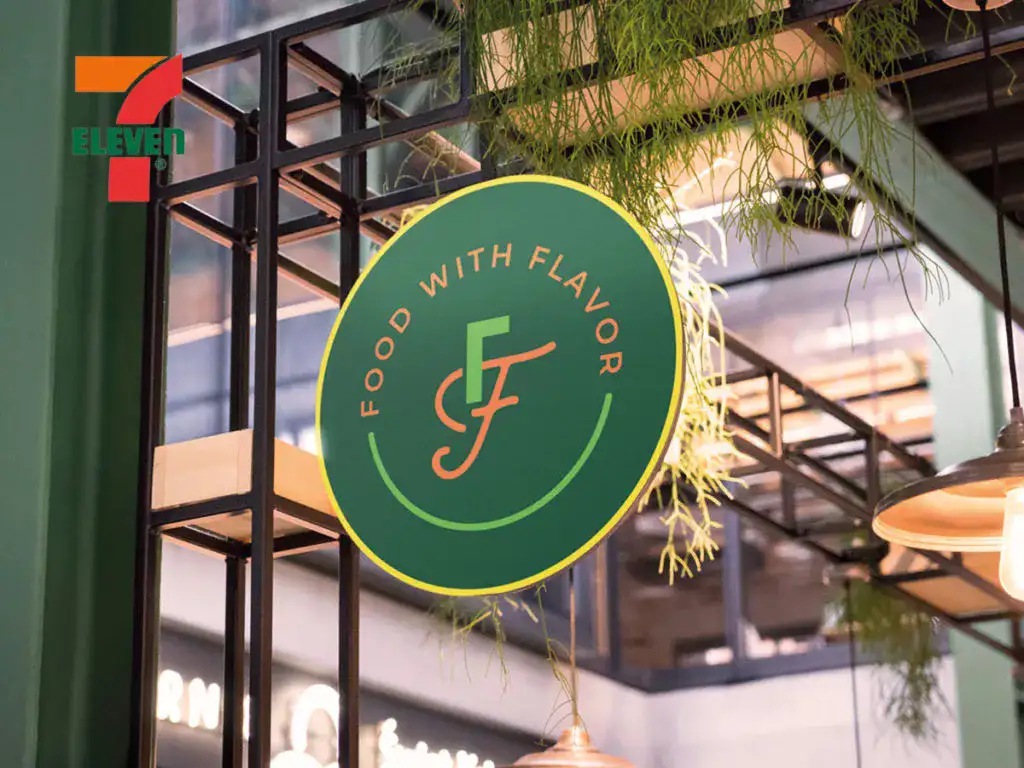
Creating a New Category: When Convenience Store Meets Gourmet
The Category That Shouldn’t Exist (But Does)
Client: Chaudhary Petroleum Group (7-Eleven Franchisee)
Location: Westlake, Florida (pilot) → National rollout
Crisis Type: Category Void + Expansion Risk
Timeline: 9-month launch → 24-month national expansion
BRANDEM Pillars Applied: VISION • BEACON • EXPERIENCE • NARRATIVE
🔥 THE SITUATION: When Your Growth Opportunity Doesn’t Have a Name
The Chaudhary Petroleum Group (CPG) wasn’t a typical 7-Eleven franchisee. They were operators with a billion-dollar portfolio across Florida—gas stations, convenience stores, real estate developments.
But they saw something nobody else saw.
The Data-Driven Insight
CPG’s analysts discovered a pattern:
- Peak traffic hours: 11:30am-1:30pm, 5:30pm-7:30pm (meal times)
- Customer dwell time: 3.2 minutes average
- Missed revenue: Customers buying Slim Jims and Doritos when they wanted real food
- Untapped wallet share: $8-15 per visit potential vs. $4.20 actual
Translation: Millions in revenue walking past their stores because the category didn’t exist.
The Founder’s Dilemma
CPG’s leadership faced a strategic crisis:
Option A: Keep running successful 7-Eleven franchises (safe, profitable, predictable)
Option B: Invent a new food category that’s never existed:
- Not fast food (too low quality)
- Not fast-casual (too slow, too expensive)
- Not convenience store food (solving the problem with the problem)
- Something entirely new: “Culinary Oasis in Convenience Culture”
The risk: $2.4M buildout cost. Zero proof of concept. Category that might not make sense to customers.
The question: Can you create gourmet food experiences inside a 7-Eleven?
🎯 THE TASK: Inventing a Category Nobody Knows They Need
The Strategic Challenge:
Create a brand and experience that could:
- Redefine “convenience food” from Slim Jims to gourmet bowls
- Justify premium pricing ($9-14 meals) in a $2-5 environment (7-Eleven)
- Maintain speed (sub-5-minute service) while delivering gourmet quality
- Attract new audience without alienating existing 7-Eleven customers
- Scale nationally across diverse CPG/7-Eleven locations
The Bigger Challenge:
You can’t just “add a restaurant to a 7-Eleven.” The categories fight each other:
- 7-Eleven = Cheap, processed, grab-and-go
- Fusion Fresh = Fresh, gourmet, chef-crafted
How do you make those two truths coexist in the same physical space?
The Paradox to Solve
If you look too much like 7-Eleven: Nobody believes the food is gourmet
If you look too different from 7-Eleven: Brand confusion and wasted traffic synergy
The solution had to thread an impossible needle.
⚡ THE ACTION: BRANDEM Framework Application
Phase 1: VISION Force Activation — Defining the Category
We didn’t start with logo design. We started with category design.
The Question: What do we call a brand that’s:
- Gourmet quality (Sweetgreen, Cava)
- Convenience speed (7-Eleven, Wawa)
- Health-focused (Whole Foods)
- Budget-accessible (Chipotle)
The Category We Created: “Fast-Gourmet Convenience”
A culinary oasis in convenience culture.
Positioning Statement:
"Fusion Fresh is where health-conscious people on-the-go
discover that speed doesn't mean sacrificing taste,
nutrition, or gourmet quality."
Target Audience (Redefined):
- NOT: 7-Eleven’s core (construction workers, truckers, teens)
- YES: Adjacent audience walking past every day:
- Busy professionals (30-50, higher income)
- Health-conscious families
- Fitness enthusiasts post-workout
- “I’d go to Sweetgreen but I only have 5 minutes” crowd
The Genius: We weren’t competing with 7-Eleven’s customer base. We were capturing an entirely new audience using 7-Eleven’s traffic as the distribution advantage.
Phase 2: BEACON Force Activation — Creating Visual Distance
The Brand Identity Challenge:
The space is INSIDE a 7-Eleven. How do you create psychological distance without physical distance?
Visual Strategy:
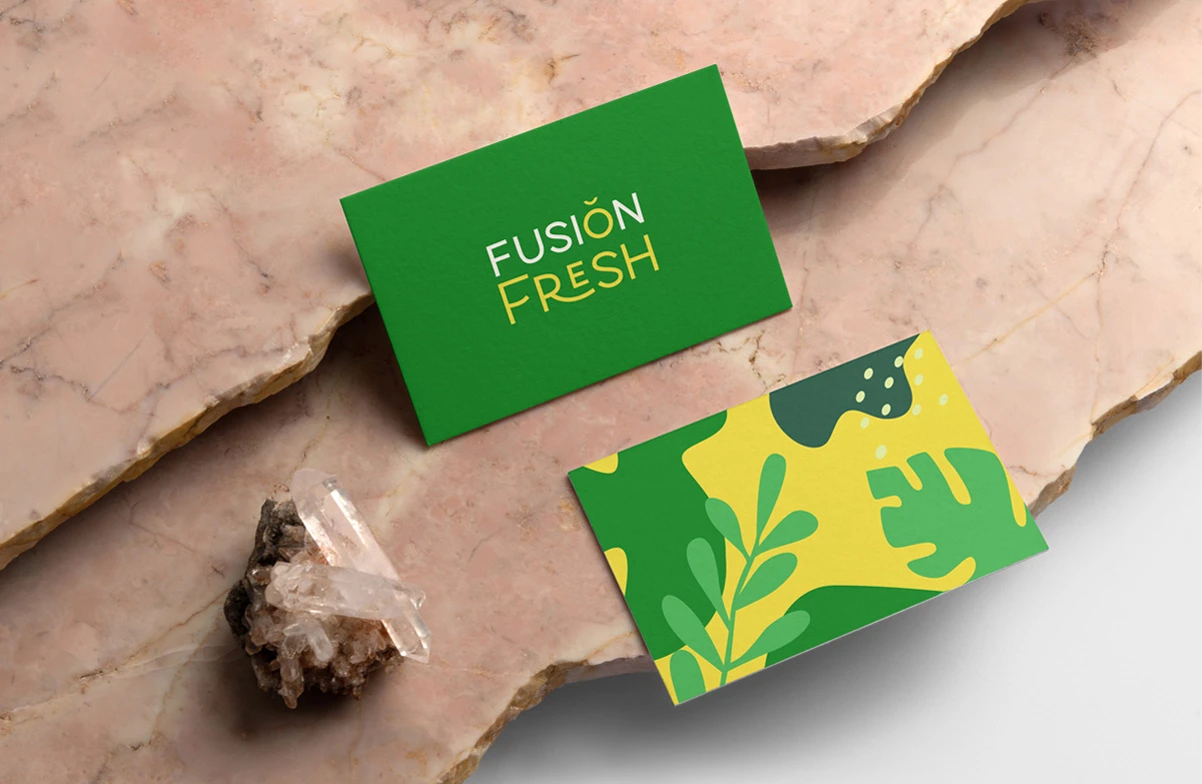
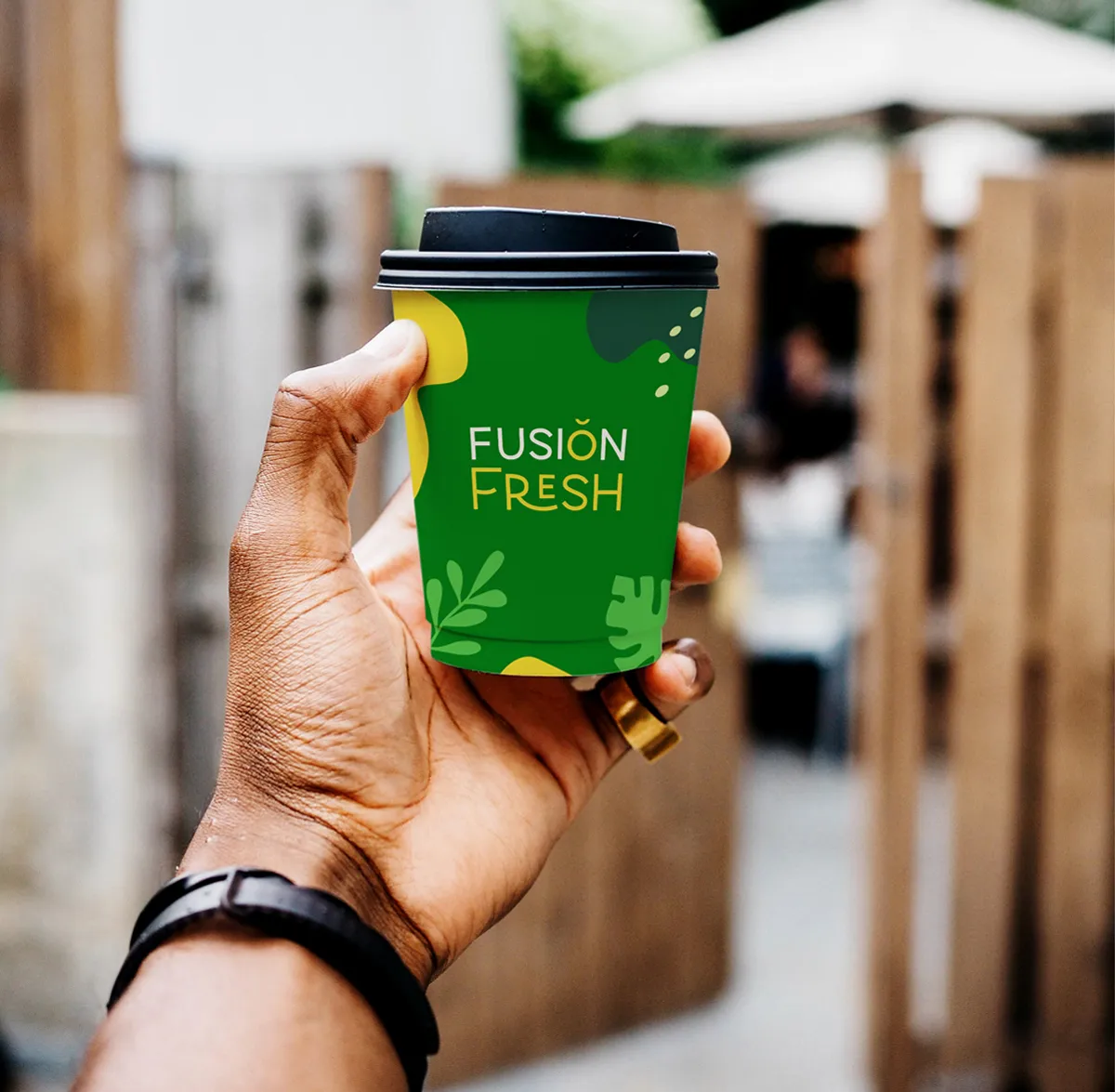
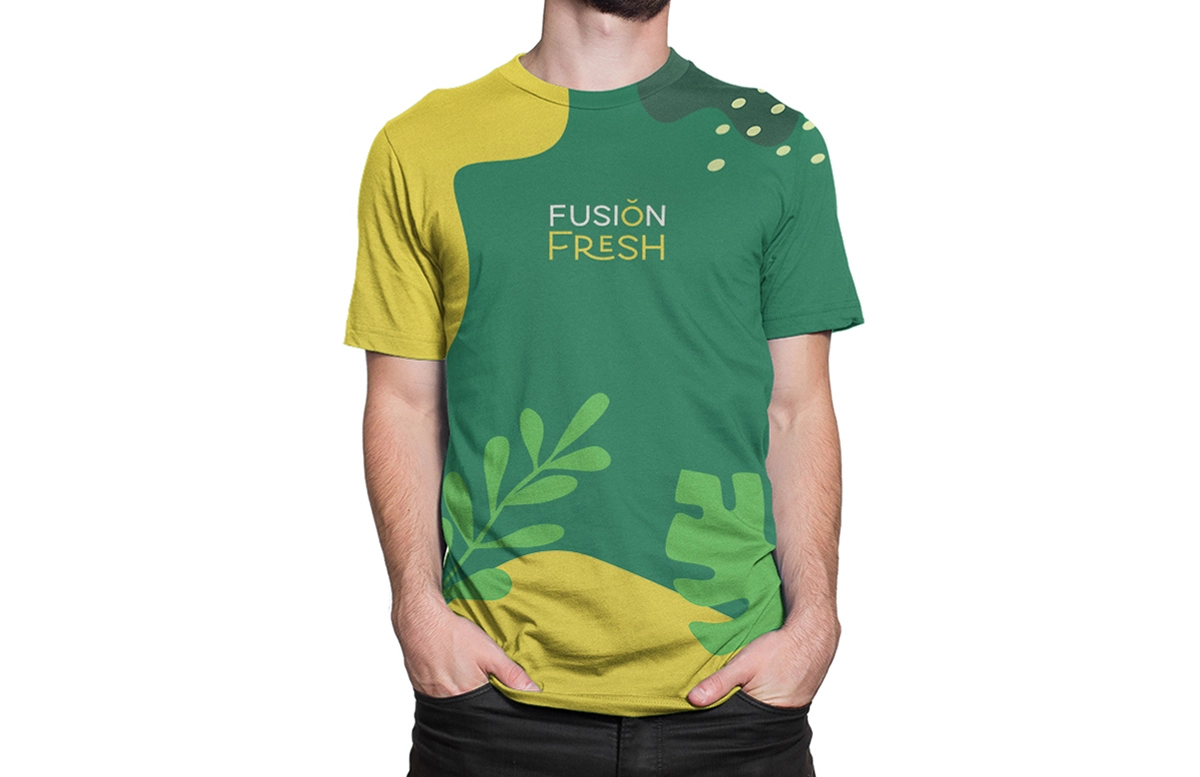
We created a brand that felt like:
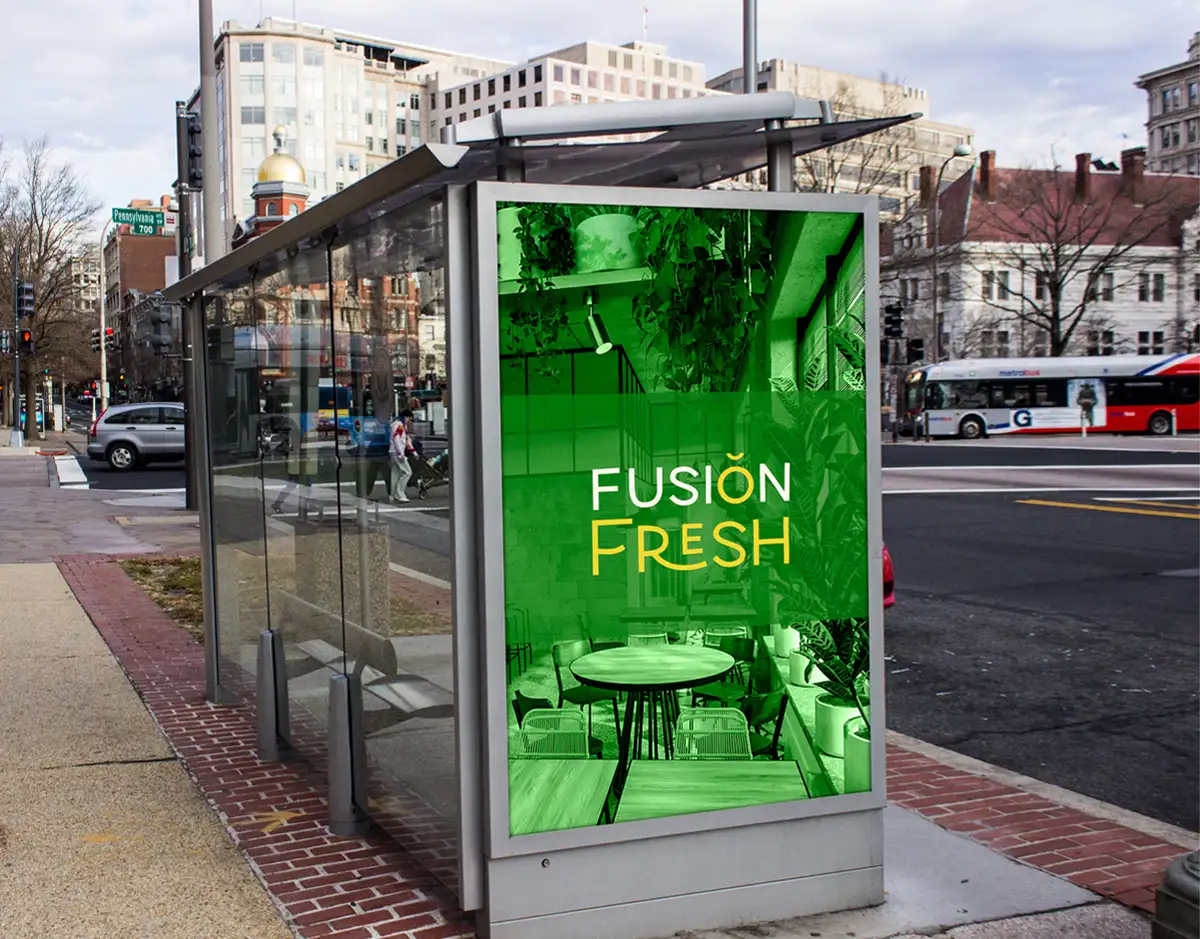
- Warmth: Vibrant oranges, sunny yellows (energy, fresh, inviting)
- Health: Greens, natural textures (wholesome, nutritious)
- Sophistication: Clean typography, elegant simplicity (gourmet, crafted)
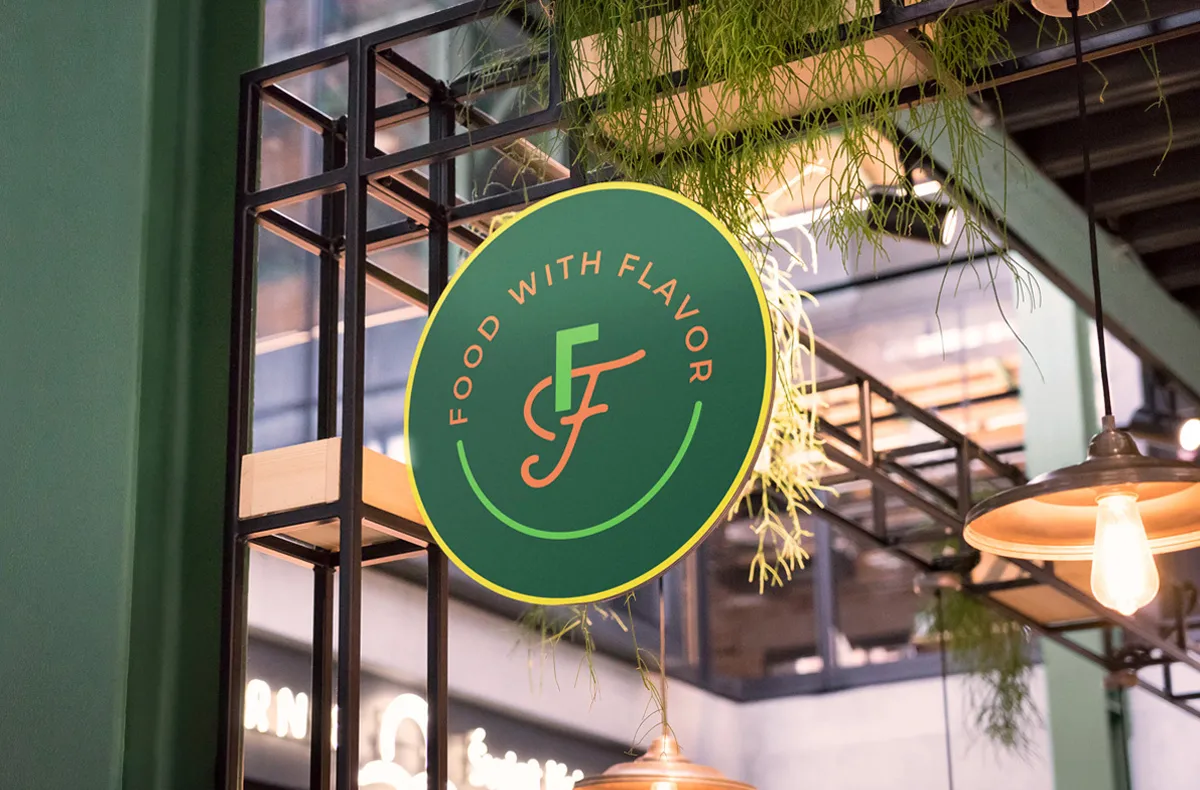
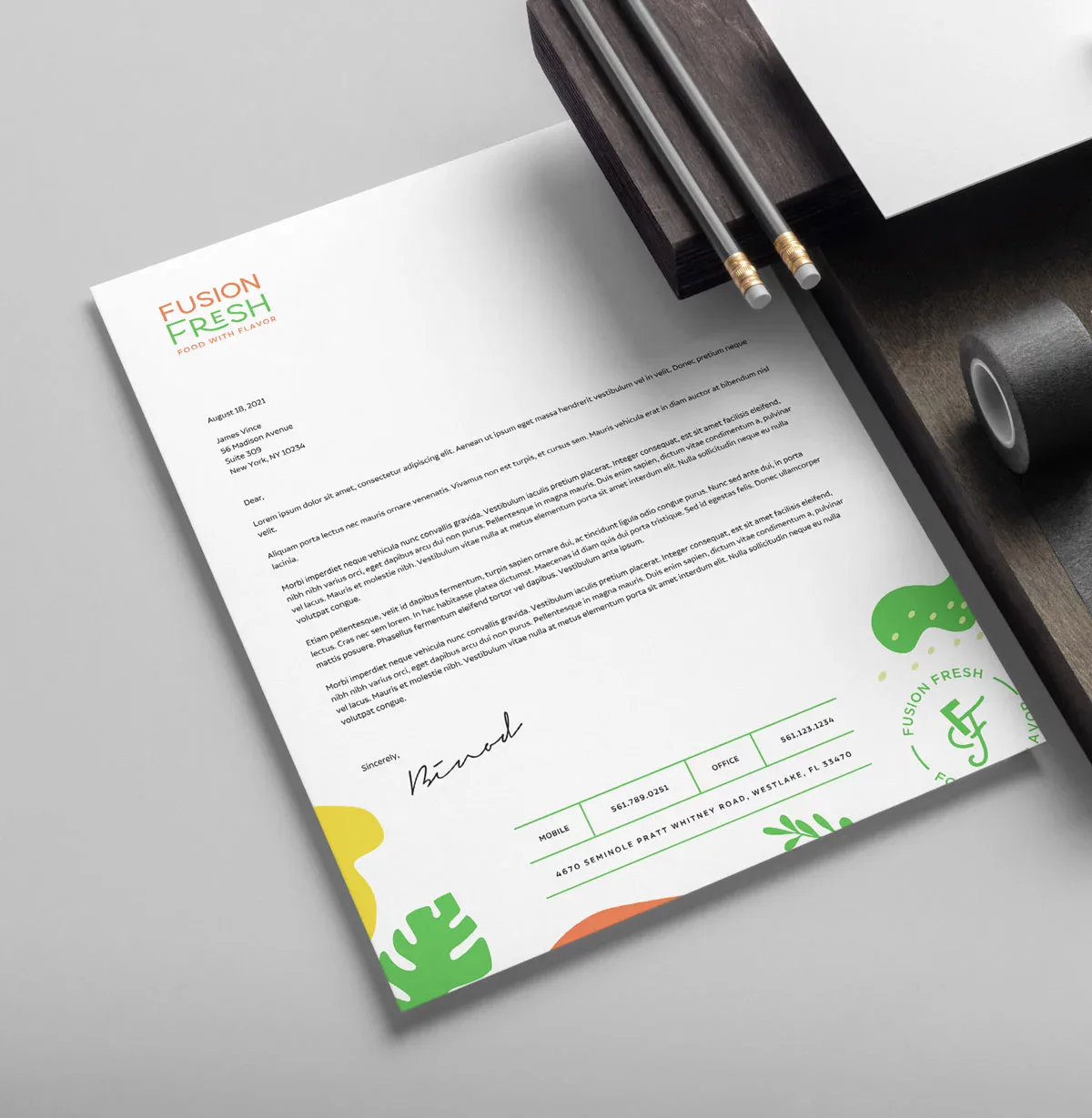
Logo Design:
- Abstract dish shape hidden in the mark (culinary sophistication)
- “Fresh” emphasized in color and weight (quality promise)
- Friendly, approachable (not intimidating fine dining)
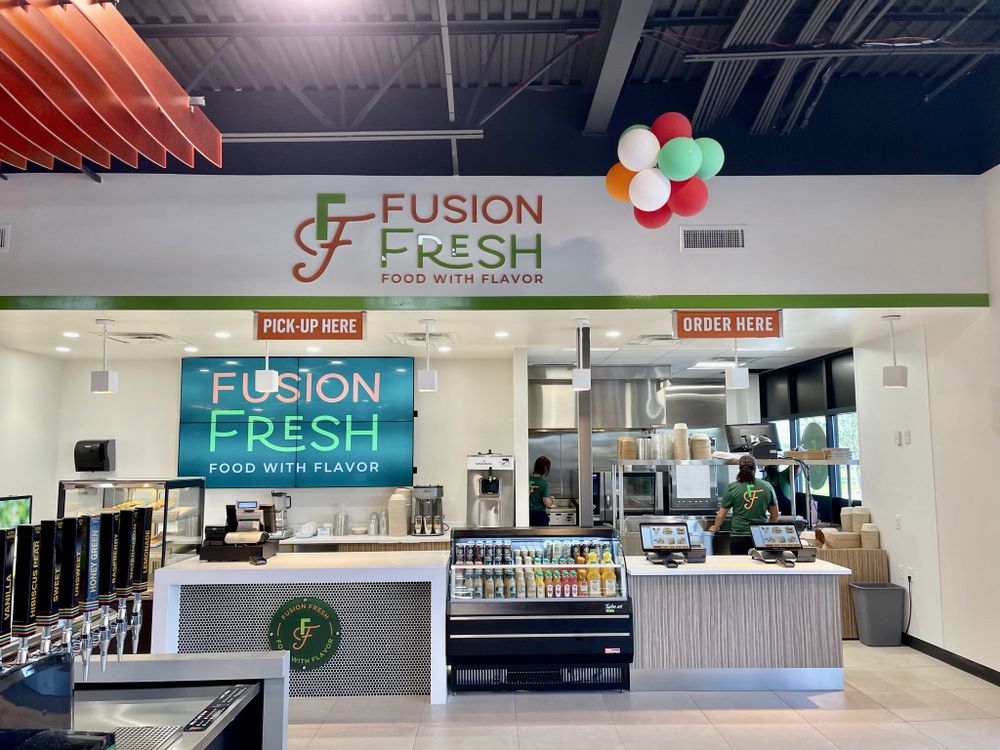
The Result: Standing inside the 7-Eleven, Fusion Fresh looks like a different world. The branding creates a “restaurant-within-a-store” perception.

Phase 3: EXPERIENCE Force Activation — “Savor the Speed”
Brand Promise: “Savor the Speed” became our mantra—encoding the paradox of gourmet + fast.
Experience Design Principles:
1. Speed Without Compromise:
- Build-your-own bowl system: 4 bases, 8 proteins, 15 toppings, 6 sauces
- Service time target: Under 5 minutes (fast-casual is 8-12 minutes)
- Quality guarantee: “If it’s not fresh, we remake it free”
2. Transparency as Trust:
- Open kitchen design: See your bowl being made
- Ingredient sourcing visible: “Organic spinach, local farms”
- No mystery meat: You see the grilled chicken breast being sliced
3. Unexpected Elevation:
- Real plates for dine-in (not Styrofoam)
- Outdoor patio space: Escape the convenience store feel entirely
- Ambient music: Separate from 7-Eleven’s energy
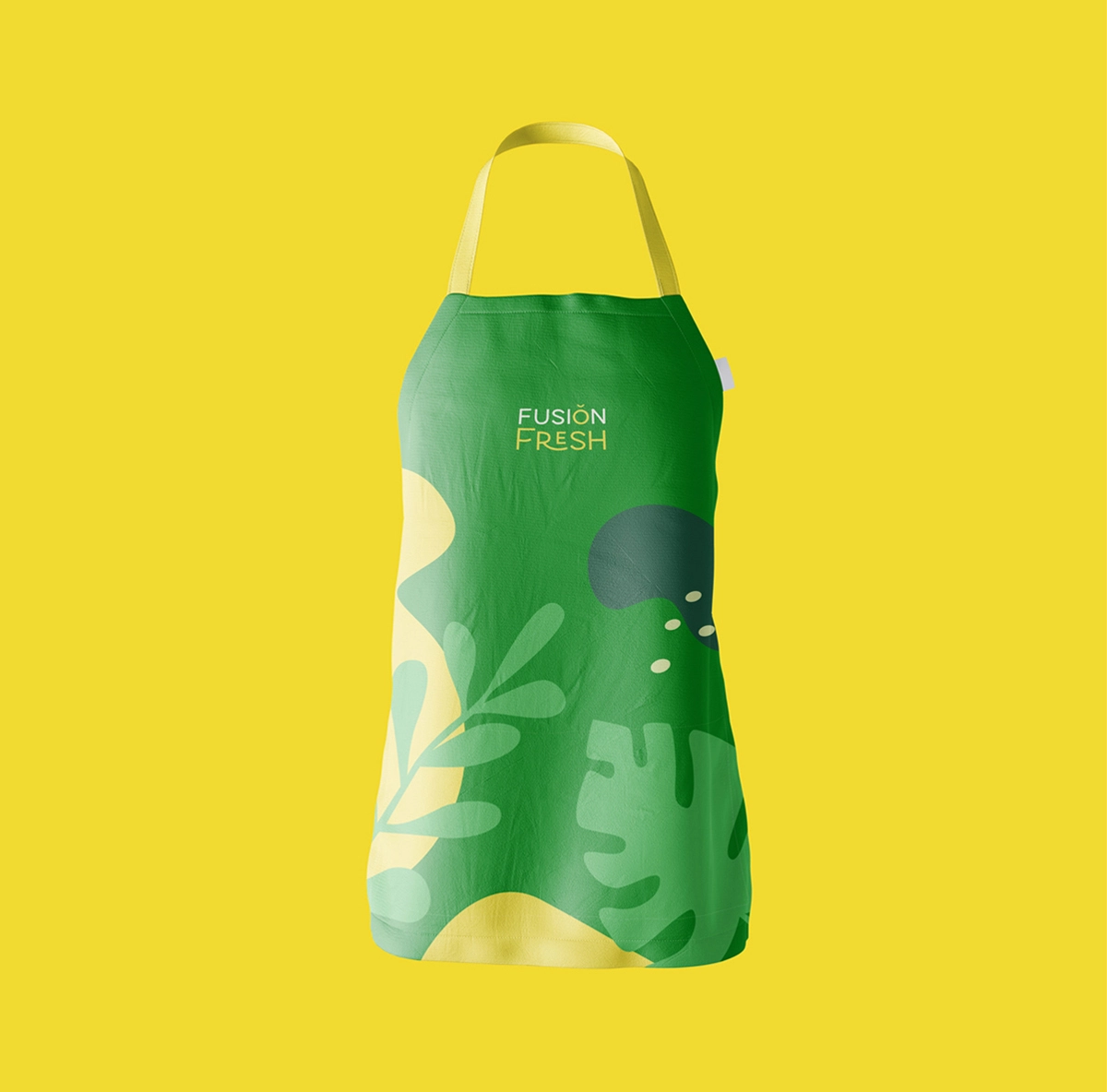
- Staff uniforms: Chef-inspired aprons (not gas station polos)
The Psychological Shift:
You walk into a 7-Eleven for a Slurpee. You discover a culinary oasis. That surprise = word-of-mouth marketing gold.
Phase 4: NARRATIVE Force Activation — “Fusion” as Permission
The Name Strategy:
“Fusion Fresh” did heavy lifting:
- Fusion: Gives permission for category-blending (7-Eleven + gourmet)
- Fusion: Signals menu diversity (global flavors, dietary preferences)
- Fusion: Creates intrigue (“What’s being fused?”)
- Fresh: Non-negotiable quality promise
Menu Storytelling:
Each item had a story, not just ingredients:
- “Mediterranean Power Bowl” (not “chicken salad”)
- “Southwest Heat” (not “burrito bowl”)
- “Thai Fusion Wrap” (not “wrap with peanut sauce”)
The messaging hierarchy:
- Health: Fresh, nutritious, real ingredients
- Speed: Under 5 minutes, in and out
- Taste: Gourmet, chef-inspired, bold flavors
- Value: $9-14 (positioned against $12-16 Sweetgreen, not $5 Subway)
Phase 5: Omnichannel Activation — Beyond the Physical
Digital Strategy:
Online Ordering:
- Mobile app: Order from car, pick up in 4 minutes
- Geofencing: Push notification when within 2 miles
- Loyalty program: “Fresh Rewards” (free bowl every 10th visit)
Catering:
- Corporate lunch catering (taps B2B market)
- “Healthier meetings” positioning vs. pizza
- Custom bowl builder for dietary restrictions
Social Proof Engine:
- Instagram-worthy bowl photography
- Hashtag: #SavorTheSpeed
- User-generated content: Customers showing “Fast-gourmet is possible”
🏆 THE RESULTS: Category Creation = Category Leadership
Quantitative Transformation (24 Months Post-Launch)
Pilot Location (Westlake, FL) Performance:
- ✅ Revenue: $2.4M annually (single location)
- ✅ Average ticket: $12.80 (vs. $4.20 7-Eleven average) — +205% per transaction
- ✅ Daily transactions: 620 average (new customers, not cannibalizing 7-Eleven)
- ✅ 7-Eleven store revenue impact: +18% (halo effect, customers buy drinks/snacks too)
Customer Acquisition:
- ✅ New customer demographic: 73% had NEVER shopped at this 7-Eleven before
- ✅ Age shift: Average customer age 38 (vs. 24 for 7-Eleven)
- ✅ Income shift: Average household income $78K (vs. $42K for 7-Eleven)
- ✅ Repeat rate: 41% weekly visitors (created habit formation)
Speed + Quality Metrics:
- ✅ Average service time: 4:20 minutes (goal: under 5 minutes) ✅
- ✅ Quality ratings: 4.7/5.0 average (Yelp, Google Reviews)
- ✅ “Exceeded expectations” responses: 89% (category surprise factor)
National Expansion:
- ✅ Locations opened: 22 CPG/7-Eleven franchises (Florida, Georgia, Texas)
- ✅ Average location revenue: $1.8M - $2.6M annually
- ✅ ROI timeline: 14 months average breakeven (real estate investment)
Qualitative Wins
The Ultimate Validation:
Customer testimonial (Google Review, 5 stars):
“I literally thought it was a joke when my coworker said ‘let’s get gourmet bowls at 7-Eleven.’ But this place is LEGIT. Mediterranean bowl is better than Cava, faster than Chipotle, and I can grab a coffee on my way out. This is my new lunch spot.”
That’s category creation working.
The Competitive Response
What happened after Fusion Fresh launched:
Competitors tried to copy:
- Wawa added “fresh bowls” (failed, felt forced)
- Several 7-Eleven franchisees tried DIY versions (inconsistent quality)
- Regional chains experimented with “healthy convenience”
Why CPG/Fusion Fresh won:
- First-mover advantage (defined the category)
- Brand clarity (not trying to be two things, IS two things harmoniously)
- Operational excellence (speed + quality is HARD to execute)
- Strategic real estate (owned the distribution, not renting)
CPG’s ROI:
- Portfolio value: Each location with Fusion Fresh worth 40% more in real estate valuation
- Revenue diversification: No longer dependent on gas margins
- Exit optionality: Fusion Fresh IP now licensable/franchisable
💡 THE STRATEGIC LESSON: Category Creation is Founder Gold
What This Means for Your Business
If you’ve ever thought “this doesn’t exist yet,” you’re either:
- Wrong (it exists, you haven’t found it)
- Right (and you’re sitting on a billion-dollar opportunity)
Fusion Fresh proved: The most defensible positioning is creating a category nobody knew they needed.
Why category creation wins:
- No direct competition (you define the rules)
- Premium pricing (no “comp set” to compare)
- Media attention (novelty = coverage)
- Customer loyalty (first mover = standard bearer)
The Framework You Can Steal
1. Find the Gap Between Two Categories
- Fusion Fresh: Fast-casual + Convenience store
- Your version: What two categories can you bridge?
Examples:
- Gym + Spa = Recovery studio
- Consulting + SaaS = Strategy automation
- Education + Entertainment = Edutainment
2. Solve the Paradox
- Quality + Speed (Fusion Fresh)
- Affordable + Premium
- Complex + Simple
- Enterprise + Agile
If it sounds impossible, you might be onto something.
3. Create Psychological Distance
- Fusion Fresh: Same building as 7-Eleven, feels completely different
- Visual identity, experience design, messaging = distance creation
- Customers need permission to believe the category
4. Prove It With One Perfect Example
- Nail the pilot location
- Showcase the concept working
- Use success to fund expansion
- Fusion Fresh: Westlake → 22 locations
5. Name the Category You Created
- “Fast-Gourmet Convenience”
- Give it a name = make it real
- Media, customers, competitors all need language
The Crisis This Solves
If you’re facing:
- Commodity category with brutal competition
- “Race to the bottom” pricing pressure
- Founder vision nobody understands yet
- “This should exist but doesn’t”
- Growth ceiling in current category
This is your playbook.
🔄 The Continuing Evolution
Today, Fusion Fresh:
- 22 locations operational (target: 50 by 2026)
- Franchise interest: 140 inquiries from independent operators
- Expansion formats: Mall kiosks, airport locations (testing)
- Menu evolution: Seasonal bowls, breakfast expansion, smoothies
- Tech integration: AI-powered ordering (dietary preference learning)
- Category ownership: When people think “gourmet convenience,” they think Fusion Fresh
CPG Founder’s quote:
“The framework didn’t just create a restaurant—it created a new asset class for our portfolio. Every property we develop now, we ask: ‘Can this support a Fusion Fresh?’ The brand became our growth engine. That’s not marketing. That’s business transformation.”
📞 Your Category Creation Opportunity?
If you’re a founder who sees a gap between two categories, we should talk.
The BRANDEM Framework specializes in:
- Category creation and naming strategies
- Paradox positioning (quality + speed, premium + accessible)
- Experience design for new categories
- Pilot-to-scale frameworks
- Founder crisis intervention for “nobody gets my vision yet”
Because sometimes the crisis isn’t that you need to compete better.
Sometimes it’s that you need to create a category where competition doesn’t exist yet.
Related Framework Resources:
- VISION Pillar: Category Creation →
- BEACON Pillar: Identity for New Categories →
- EXPERIENCE Pillar: Service Design →
- NARRATIVE Pillar: Naming Your Category →
- More Founder Transformation Case Studies →
This transformation demonstrates BRANDEM OS pillars in action: VISION (category creation), BEACON (brand identity for new space), EXPERIENCE (service design), and NARRATIVE (category storytelling). Every founder “this doesn’t exist yet” crisis has a framework-based solution.