
Strategic Brand Architecture: When One Brand Isn’t Enough
The Conglomerate’s Identity Crisis
Client: INDOSPEC (Indonesia Specialty Energy & Property Corporation)
Location: Indonesia (operations) / USA (headquarters)
Crisis Type: Brand Architecture Chaos + Market Confusion
Timeline: 11-month system design + implementation
BRANDEM Pillars Applied: BEACON • VISION • STRUCTURE (brand architecture)
🔥 THE SITUATION: Five Businesses, Zero Brand Clarity
INDOSPEC wasn’t a company—it was an energy empire.
Over 15 years, they’d grown from a solar installation contractor to a diversified energy conglomerate with five distinct business units:
- Solar Power (PV generation, solar farms)
- Green Energy (R&D, sustainable solutions, energy management)
- Oil & Gas Drilling (extraction, industrial services)
- Electrical Power (grid infrastructure, industrial electrical)
- Property Development (commercial real estate, energy-efficient buildings)
Combined revenue: $320M annually. Impressive growth trajectory. Major clients across Southeast Asia.
But nobody understood who they were.
The Market Confusion
The problems INDOSPEC faced:
1. Brand Dilution:
- Solar clients thought they ONLY did solar
- Oil & gas clients didn’t know about property development
- Cross-sell rate: 4% (should be 30%+ for conglomerates)
2. Credibility Crisis:
- “Are you a solar company or an oil company?” (confused prospects)
- “Can’t be good at everything” (market skepticism)
- RFP loss rate: 43% due to “unclear specialization”
3. Operational Chaos:
- Each division using different logos, colors, messaging
- No visual connection between businesses
- Sales team confusion: “Which logo do I use on this proposal?”
4. M&A Challenges:
- Acquiring companies, but can’t integrate them (no brand system)
- Each acquisition creates MORE confusion
- Integration cost: 2x industry standard (branding chaos)
The Founder’s Dilemma
The CEO faced the classic conglomerate brand crisis:
Option A: One master brand for everything
Risk: Lose sector-specific credibility (“Can’t be expert in solar AND oil drilling”)
Option B: Separate brands for each division
Risk: Zero brand equity transfer, expensive marketing, customer confusion
Option C: Branded house vs. house of brands strategy
Challenge: How do you architect it?
The question every conglomerate founder faces: How do you maintain diversity while building coherence?
🎯 THE TASK: Design a Scalable Brand Architecture System
The Strategic Challenge:
Create a brand system that could:
- Unite five diverse businesses under strategic umbrella
- Maintain sector credibility (oil clients believe oil expertise, solar clients believe solar expertise)
- Enable cross-selling (make connections visible)
- Scale infinitely (future acquisitions, new divisions)
- Look professional at enterprise level (government contracts, institutional clients)
The Constraints:
- Can’t rebrand everything overnight (operational continuity)
- Must work across cultures (Indonesia, US, regional variations)
- Needs to be implementable by internal teams (not design-dependent)
- Budget for rollout: Limited (smart system, not expensive execution)
The Opportunity:
Most conglomerates either:
- Confuse the market (no system)
- Bore the market (corporate blandness)
INDOSPEC could do both: Clear system + distinctive brands.
⚡ THE ACTION: BRANDEM Framework Application
Phase 1: VISION Force Activation — Defining the Architecture Strategy
The Strategic Framework:
We chose “Endorsed Sub-Brand Architecture” (the sweet spot):
MASTER BRAND (INDOSPEC)
    ↓
  Endorses
    ↓
DIVISION BRANDS (Solar, Green, Oil, Electric, Property)
How It Works:
- Each division gets its own brand identity
- Each division is visibly connected to INDOSPEC parent
- Benefits: Sector credibility + brand equity transfer
Why This Wins:
- Solar clients see “INDOSPEC Solar” → credible in solar
- But also see INDOSPEC → enterprise backing, stability
- Cross-sell unlocked: “You know us for solar, did you know we also…”
Phase 2: BEACON Force Activation — Creating the Visual DNA
The Design System:
We needed a flexible visual structure that could:
- Look cohesive across 5+ divisions
- Allow unique sector expressions
- Scale to future divisions
- Be implementable by non-designers
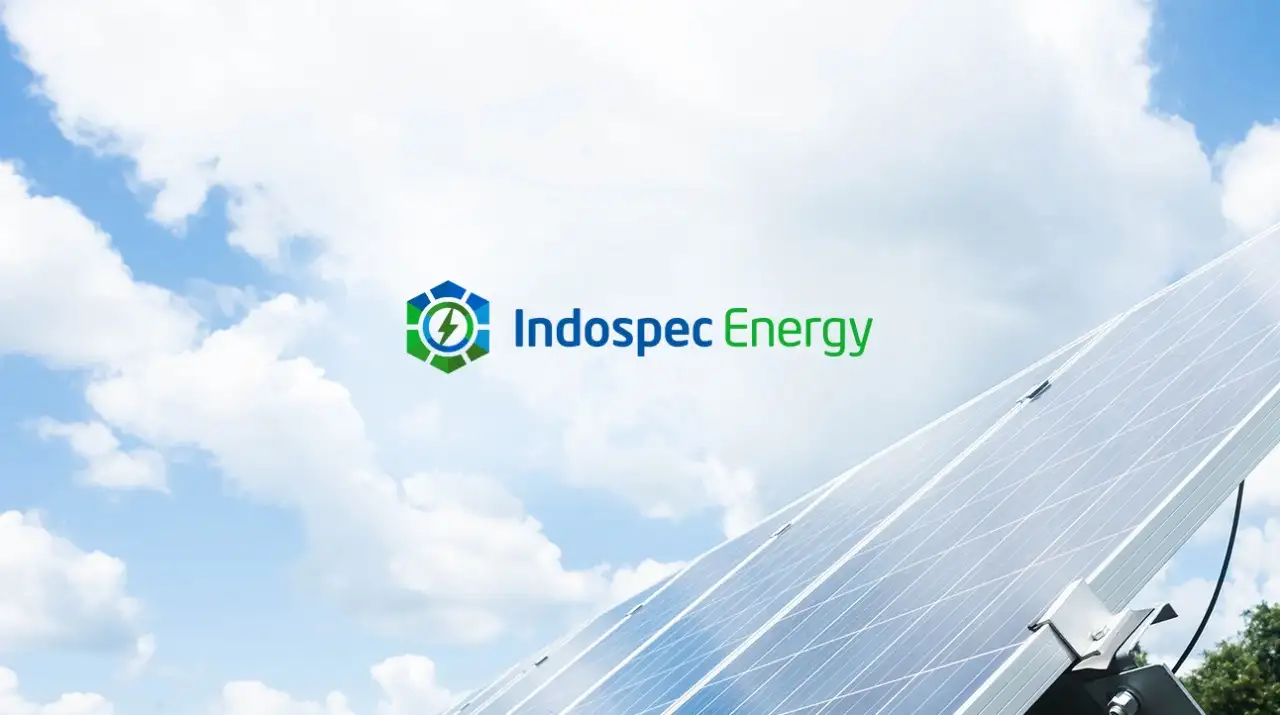
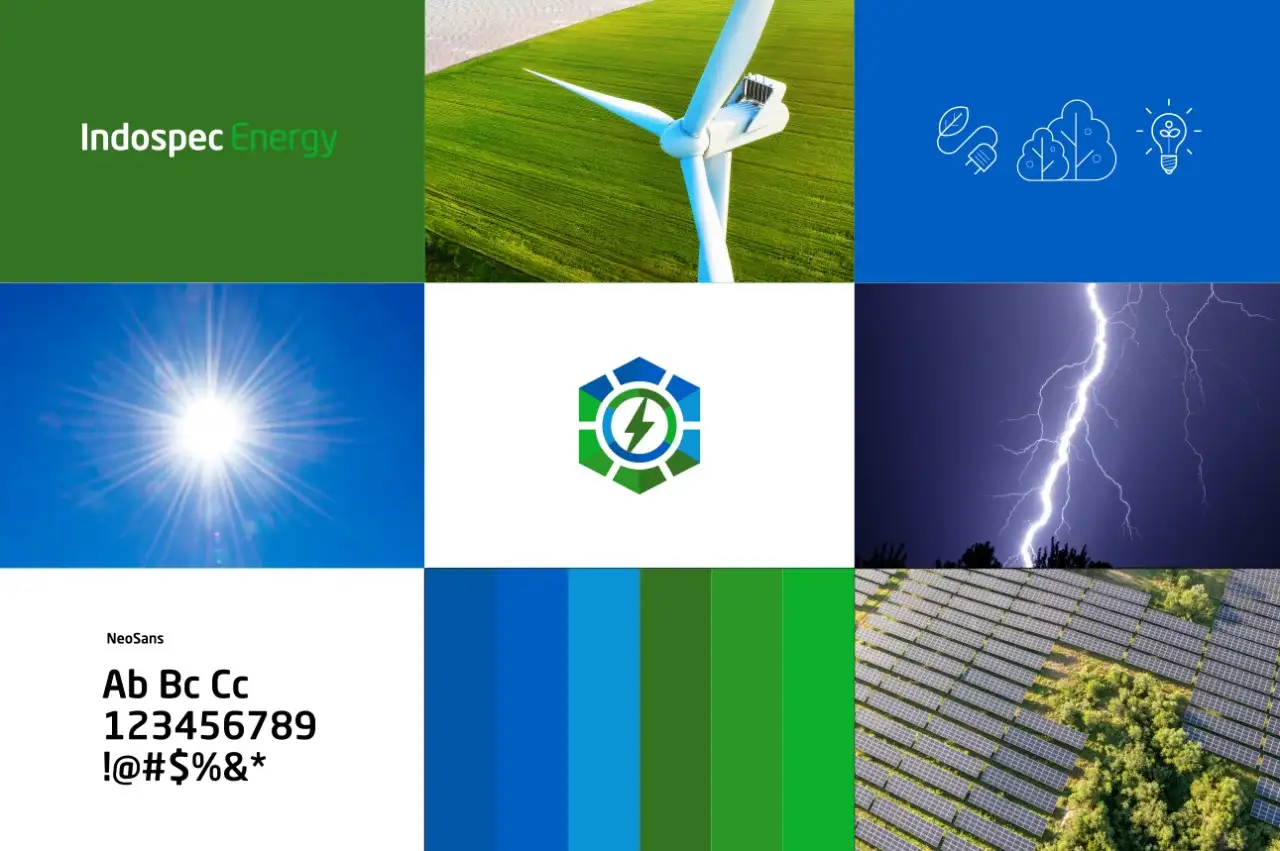
The Hexagon System We Created:
Core Structure:
- Base: Hexagon shape (geometric, technical, energy-sector appropriate)
- Flexibility: Each division customizes INSIDE the hexagon
- Unity: Hexagon itself = instant brand family recognition
Why Hexagon:
- Six sides = room for growth (currently 5 divisions, can add 6th, 7th)
- Geometric = precision, engineering, technical expertise
- Tessellates = interconnected businesses (visual metaphor)
Phase 3: Sub-Brand System Execution
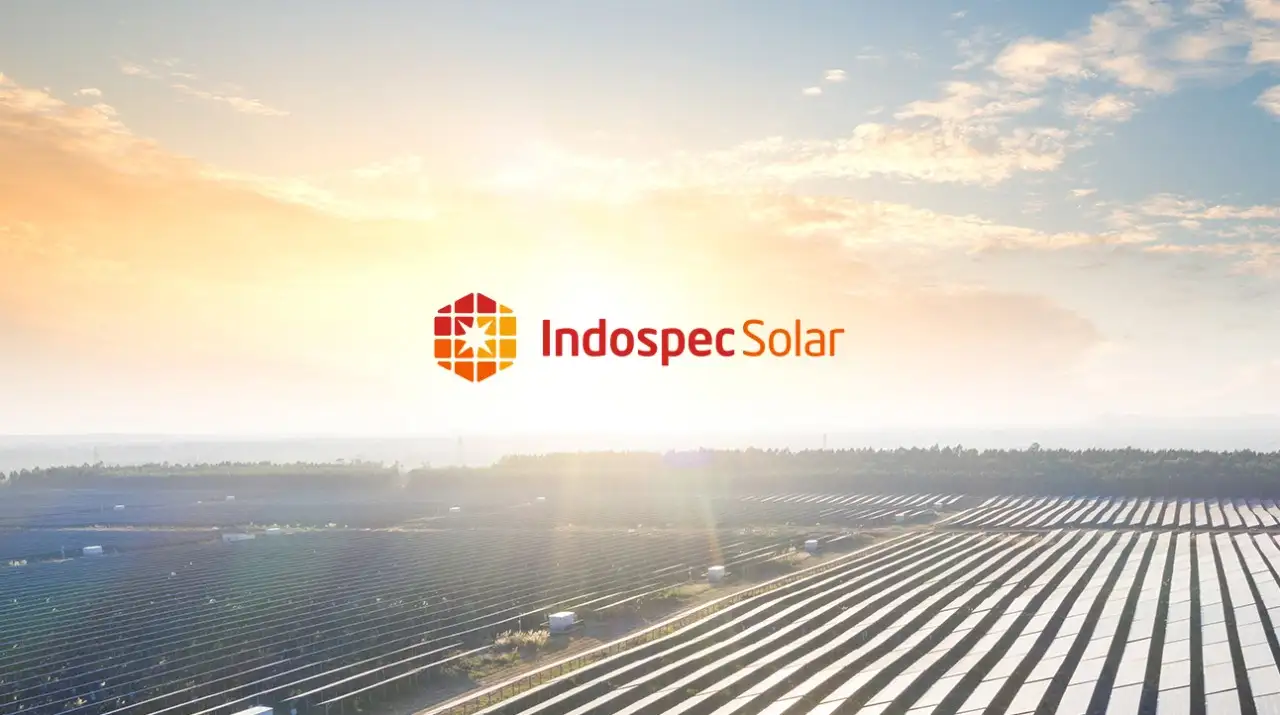
Division 1: INDOSPEC Solar
- Icon: Sun + solar panel inside hexagon
- Color: Bright yellow/orange (solar energy)
- Message: “Harnessing Indonesia’s Sunshine”
Division 2: INDOSPEC Green Energy
- Icon: Light bulb + leaf (ideas + sustainability)
- Color: Vibrant green (sustainability)
- Message: “Tomorrow’s Energy, Today”
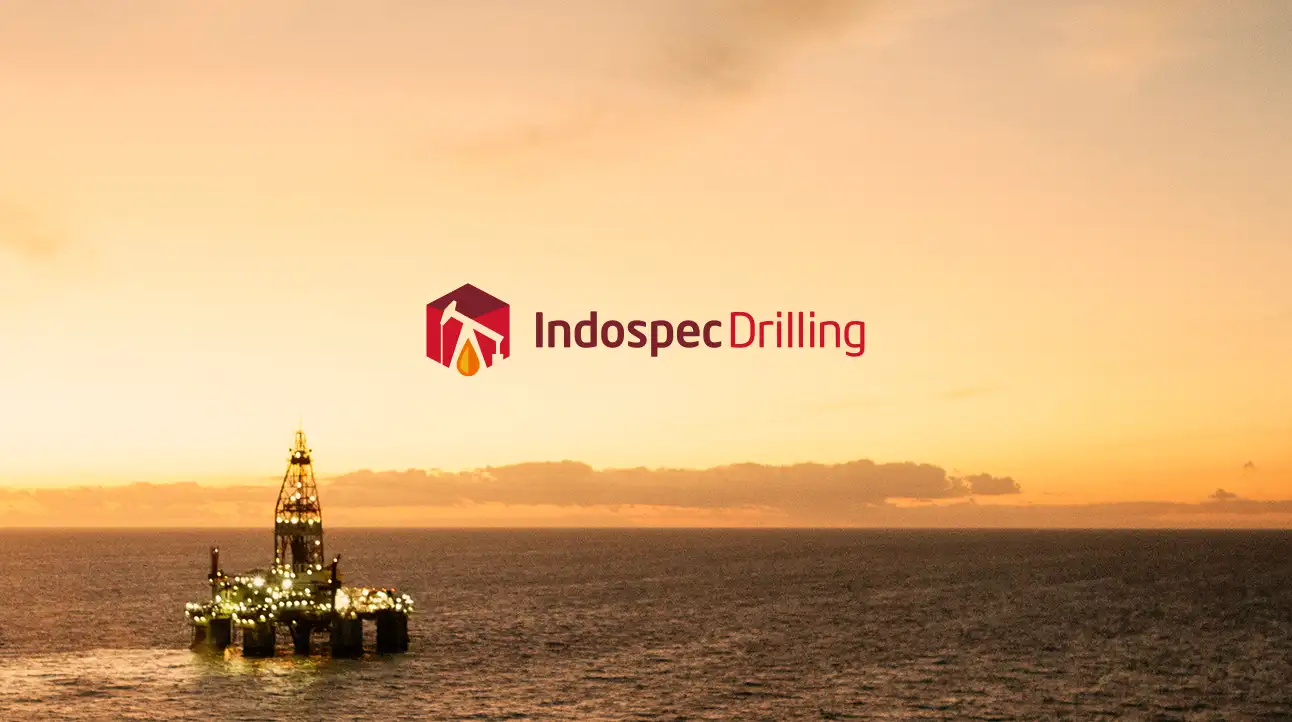
Division 3: INDOSPEC Oil & Gas
- Icon: Oil drop + drill + barrel (sector symbols)
- Color: Deep blue/black (oil/industrial)
- Message: “Powering Industrial Growth”
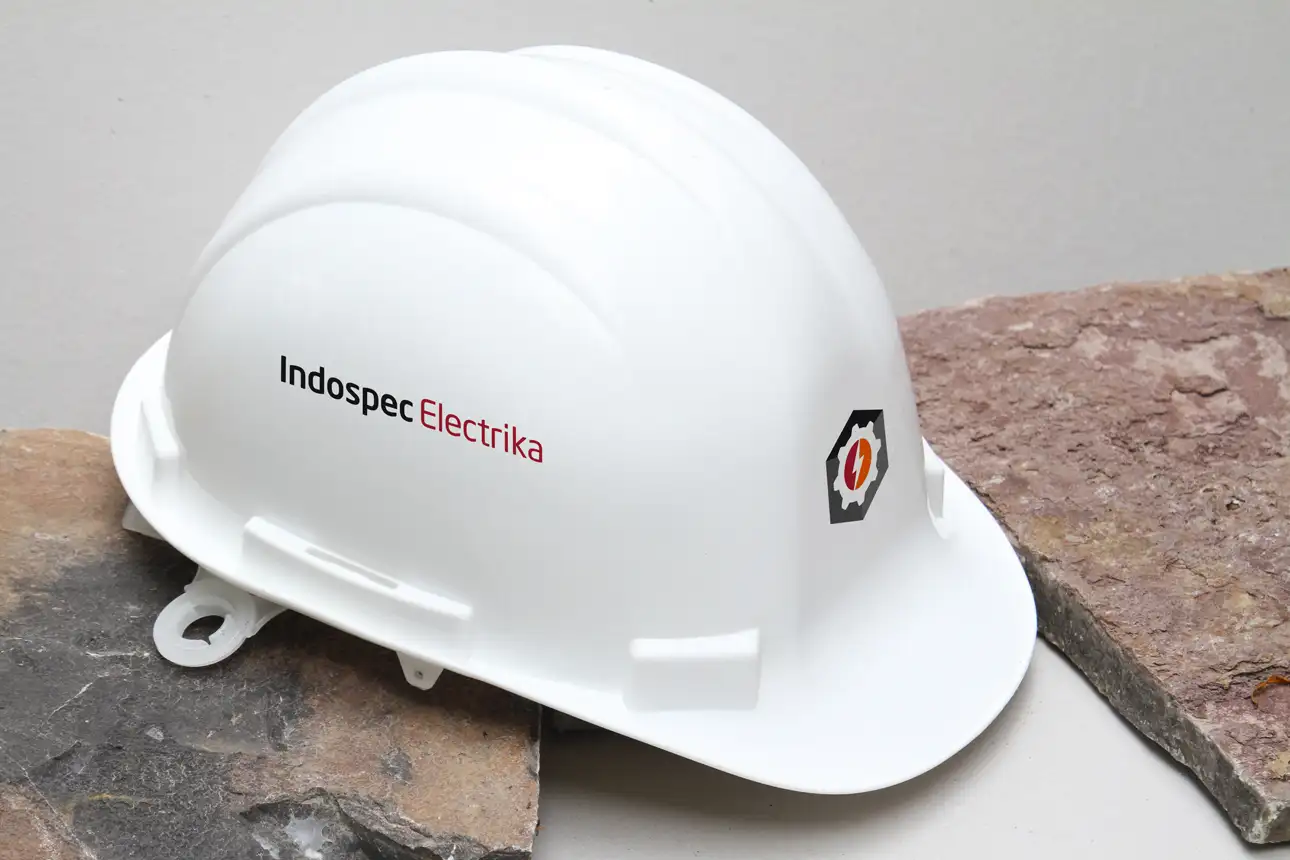
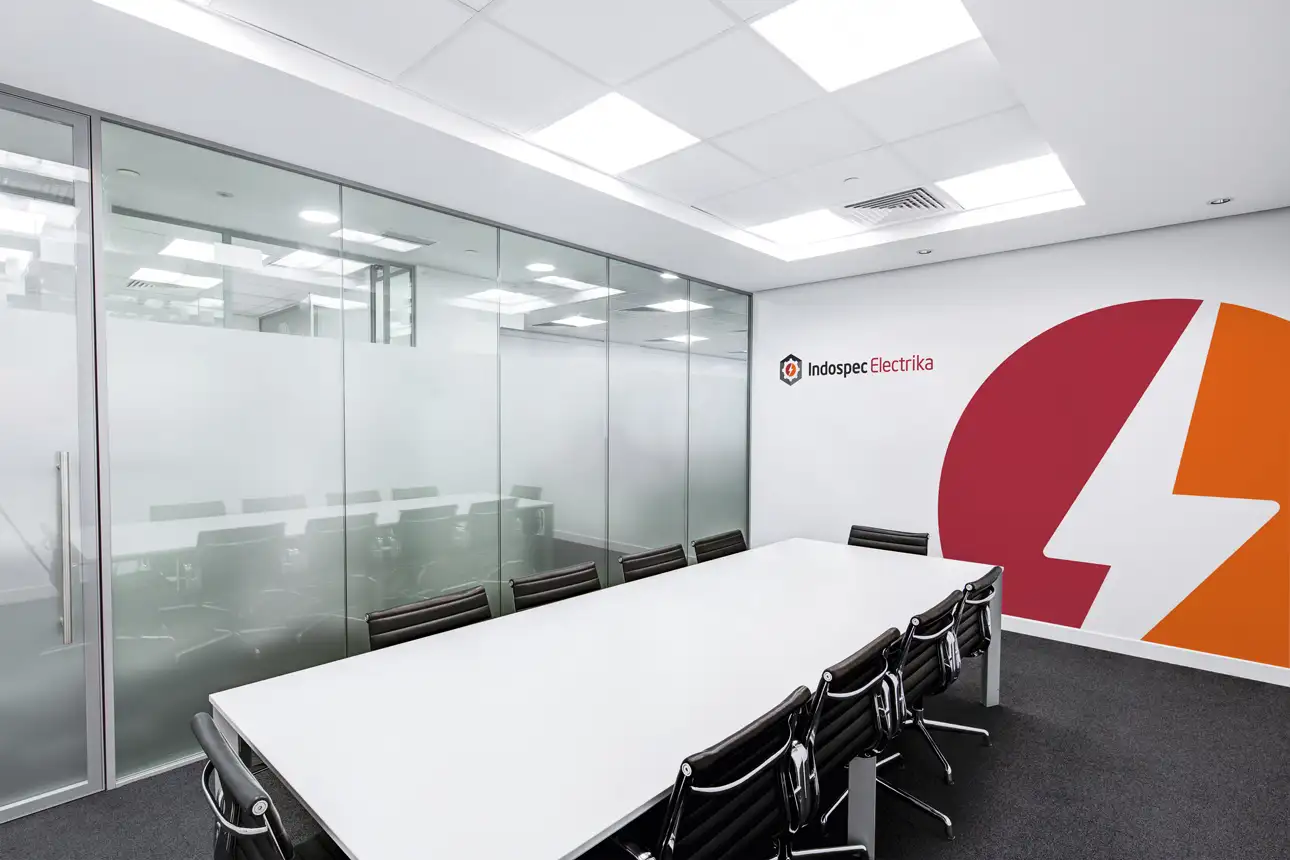
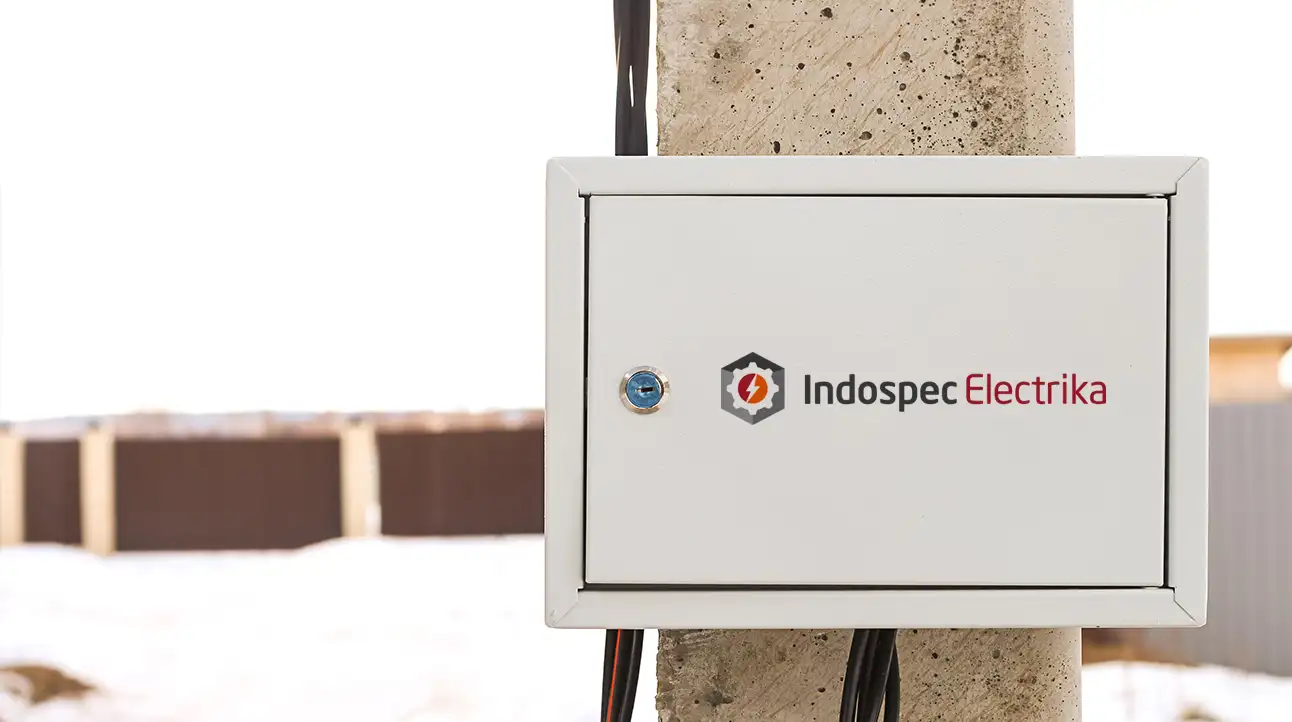
Division 4: INDOSPEC Electric Power
- Icon: Lightning bolt + factory (industrial power)
- Color: Electric blue (energy, power)
- Message: “Infrastructure for Industry”
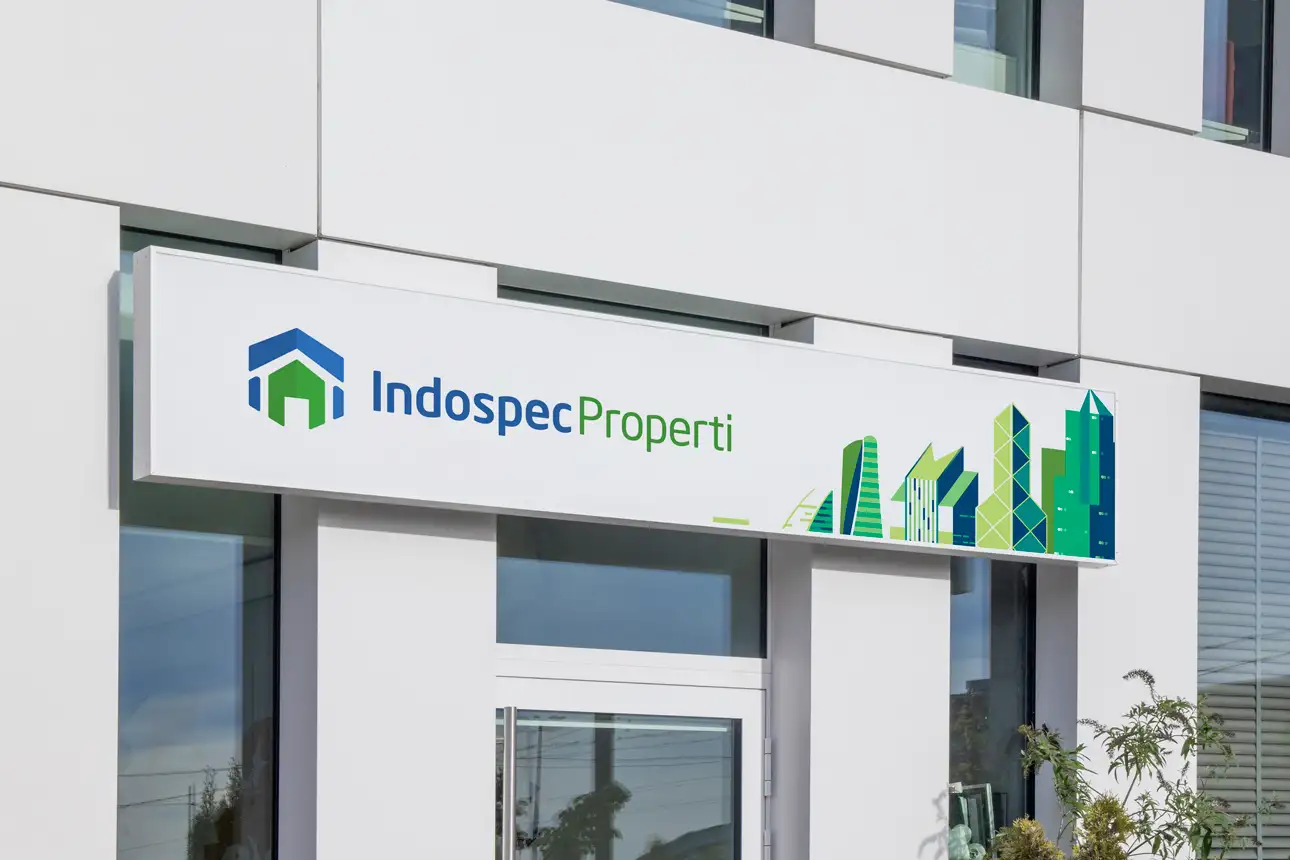
Division 5: INDOSPEC Property
- Icon: House + globe (universal real estate)
- Color: Earth green + sky blue (global development)
- Message: “Building Sustainable Futures”
The Genius: Same hexagon structure, completely different expressions. Familiar yet unique.


Phase 4: Implementation Playbook
Brand Guidelines Document:
Not just “here’s the logo”—actual strategic rules:
1. When to use Master Brand vs. Sub-Brand:
- Government RFPs: Master brand prominently
- Sector-specific proposals: Sub-brand prominently, master brand endorsed
- Marketing materials: Both, with hierarchy
2. Co-Branding Rules:
- Partner with another company: Master brand + sub-brand both present
- Internal cross-division projects: Both sub-brands + master brand
3. Future Division Template:
- Need new division? Use hexagon base + sector-appropriate icon
- Color selection guide (avoid conflicts with existing divisions)
- Approval process for maintaining system integrity
4. Application Examples:
- Business cards, letterhead, PowerPoint templates
- Vehicle wraps, signage, uniforms
- Website architecture, social media profiles



🏆 THE RESULTS: When Architecture Unlocks Growth
Quantitative Transformation (18 Months Post-Launch)
Cross-Selling Success:
- ✅ Cross-sell rate: 4% → 34% (+750% increase)
- ✅ Average client lifetime value: $180K → $620K (multi-division relationships)
- ✅ Upsell pipeline: $42M in qualified cross-division opportunities
Market Clarity:
- ✅ Brand recognition: 23% → 71% in Indonesia energy sector
- ✅ “What does INDOSPEC do?” confusion: 68% → 9%
- ✅ RFP win rate: 57% → 78% (clarity = confidence = wins)
Operational Efficiency:
- ✅ Marketing spend reduction: -28% (unified system vs. fragmented efforts)
- ✅ Brand rollout time for new division: 6 months → 3 weeks (templated system)
- ✅ Employee brand clarity: 34% → 89% (“I can explain what we do now”)
Revenue Impact:
- ✅ Year 1 post-rebrand: $320M → $388M (+21% growth)
- ✅ Year 2 projection: $440M+ (cross-sell pipeline converting)
- ✅ Contract size: +43% average (enterprise positioning validated)
Qualitative Wins
Client Testimonial (Oil & Gas Client):
“We hired INDOSPEC Solar for a plant solar project. During that engagement, we learned they also do industrial electrical work. We consolidated three vendors into one INDOSPEC relationship. Saved us 18% on infrastructure costs and simplified vendor management.”
Sales Team Feedback:
“Before, I’d pitch solar and clients would ask ‘Do you do X?’ and I’d have to explain we’re part of a bigger company. Now, the hexagon system makes it obvious—they SEE the family of brands. Cross-sell conversations happen naturally.”
That’s strategic brand architecture working.
The M&A Advantage
What happened after the system launch:
Acquisition 1: Regional electrical contractor ($12M)
- Integrated as “INDOSPEC Electric - Regional Division”
- Hexagon system applied in 3 weeks
- Client retention: 94% (no confusion about who bought them)
Acquisition 2: Green tech startup ($6M)
- Absorbed into INDOSPEC Green Energy division
- Brand equity transfer immediate
- Pipeline growth: +$8M Year 1 post-acquisition
CEO’s ROI:
- Brand system investment: $180K
- Cross-sell revenue unlocked: $68M over 18 months
- M&A integration cost savings: $2.4M (vs. previous fragmented approach)
- Enterprise valuation impact: +$40M (coherent conglomerate = premium multiple)

💡 THE STRATEGIC LESSON: Architecture is Strategy
What This Means for Multi-Division Founders
If you have multiple business lines, divisions, or acquisitions, your brand architecture is either:
- An asset (enables cross-sell, clarifies positioning, scales efficiently)
- A liability (confuses market, limits growth, wastes marketing spend)
INDOSPEC proved: Strategic brand architecture unlocks hidden revenue (34% cross-sell rate from 4%).
The Framework You Can Steal
1. Choose Your Architecture Model
Three main options:
Branded House:
- One master brand, everything under it
- Example: Virgin (Virgin Atlantic, Virgin Mobile, Virgin Hotels)
- Best for: Shared values, diverse categories, strong master brand
House of Brands:
- Separate brands, no visible connection
- Example: Procter & Gamble (Tide, Crest, Gillette—no P&G visible)
- Best for: Different target audiences, conflicting categories
Endorsed Sub-Brands (INDOSPEC Model):
- Division brands endorsed by master brand
- Example: Marriott (Marriott Bonvoy, Courtyard by Marriott, Renaissance by Marriott)
- Best for: Related sectors, credibility transfer needed, cross-sell opportunities
2. Create Visual DNA (Not Just Logos)
- INDOSPEC: Hexagon structure = flexible system
- Your version: What visual element can unify while allowing variation?
3. Build Implementation Playbook
- Don’t just design—document the SYSTEM
- When to use what, how to add divisions, co-branding rules
- Enable non-designers to maintain integrity
4. Use Architecture for M&A Advantage
- Acquisitions integrate faster with templated system
- Acquired companies’ clients understand relationship immediately
- Brand equity transfers = retention
5. Unlock the Cross-Sell
- Architecture makes connections visible
- “Oh, you do that too?” becomes expected, not surprising
- Train sales team to leverage brand family
The Crisis This Solves
If you’re facing:
- Multiple divisions with zero brand connection
- “What do you actually do?” market confusion
- Low cross-sell despite multiple offerings
- M&A integration brand chaos
- Fragmented marketing spend across divisions
This is your playbook.
🔄 The Continuing Evolution
Today, INDOSPEC:
- Added 6th division: Battery storage systems (integrated in 4 weeks using system)
- Regional expansion: Thailand, Vietnam (brand architecture scales across borders)
- Government contracts: +$120M won (enterprise brand clarity = trust)
- Exit strategy: Private equity interest (coherent conglomerate = attractive target)
- Internal culture: “One INDOSPEC family” (brand unity = operational alignment)
Category ownership: When Indonesian enterprises think “diversified energy leader,” they think INDOSPEC.
📞 Your Brand Architecture Crisis?
If you’re a founder with multiple business lines and brand confusion, we should talk.
The BRANDEM Framework specializes in:
- Enterprise brand architecture strategy
- Sub-brand system design
- M&A brand integration frameworks
- Multi-division cross-sell positioning
- Conglomerate brand clarity
Because sometimes the crisis isn’t that you have too many businesses.
Sometimes it’s that you don’t have a system to connect them.
Related Framework Resources:
- BEACON Pillar: Visual Systems Architecture →
- VISION Pillar: Portfolio Strategy →
- Brand Architecture Framework Guide →
- More Founder Transformation Case Studies →
This transformation demonstrates BRANDEM OS pillars in action: BEACON (visual DNA system), VISION (portfolio strategy), and STRUCTURE (endorsed sub-brand architecture). Every conglomerate brand architecture crisis has a framework-based solution.